A "challenging" trip grade indicates a demanding, high-altitude adventure (often 5,000–6,000+ meters) designed for experienced adventurers with excellent fitness.
If you’re seeking a Himalayan adventure that captures the very soul of Nepal, where nature, culture, and challenge all come together. The Annapurna Circuit Ghorepani Trek should be at the top of your list. This iconic trek circles the majestic Annapurna Massif, leading you through a tapestry of landscapes, from lush subtropical forests and rice paddies to alpine meadows and high mountain deserts.
What sets this trek apart is not just its diversity in terrain, but also in people and culture. As you ascend, you’ll witness the gradual transformation of ethnic groups, languages, architecture, and even food. The trek typically spans 12 to 20 days, depending on your chosen route and pace, covering approximately 160 to 230 km. With Trek Curator, you will get a customized itinerary that balances both adventure and acclimatization. We ensure safety without compromising the thrill.
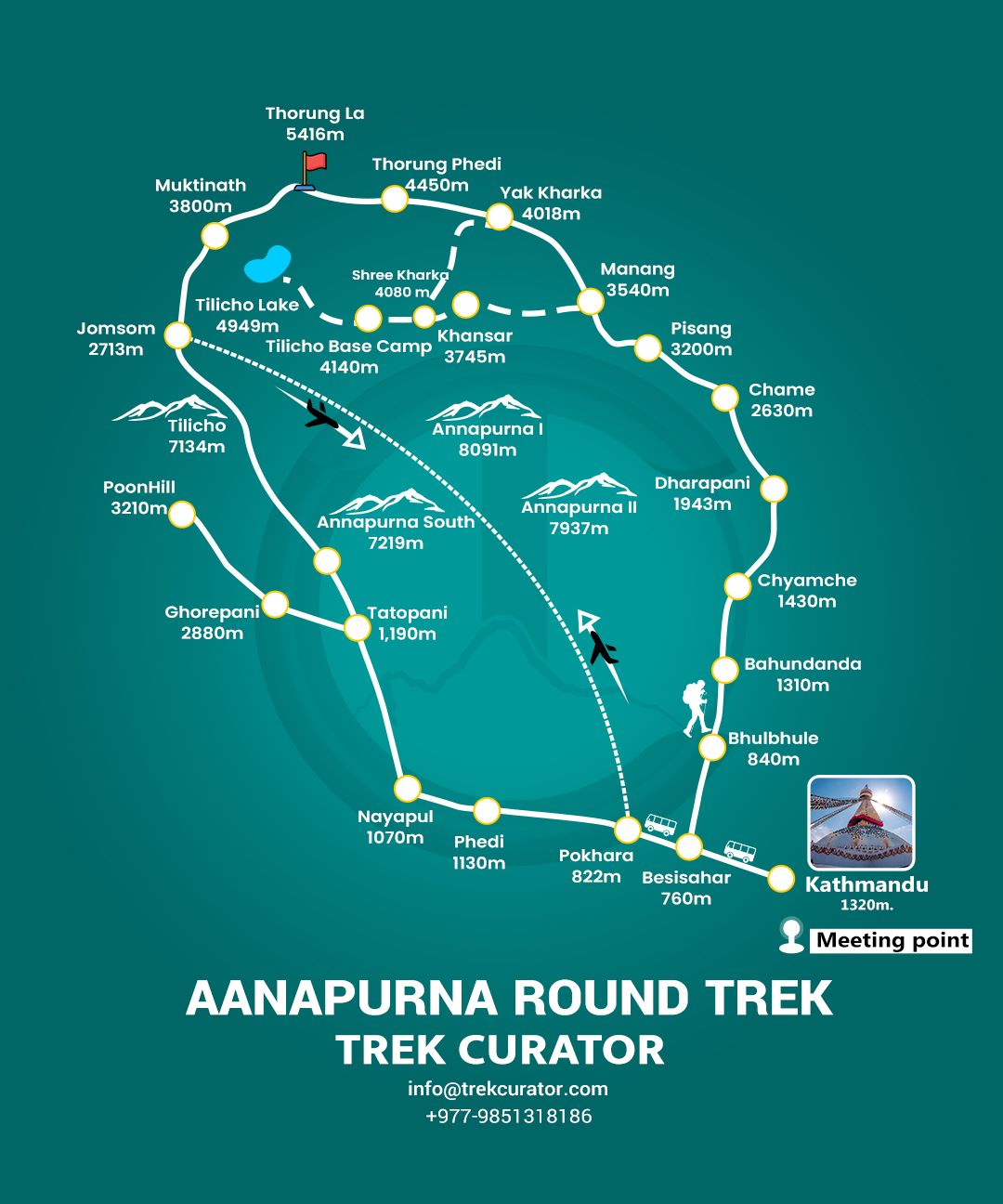
The classic Annapurna Circuit Ghorepani Trek begins at Besisahar, a small but bustling town that serves as the gateway to this legendary trail. However, thanks to road developments, many trekkers now begin from Chamje. Chame, trimming off the dusty road section and diving straight into the mountains.
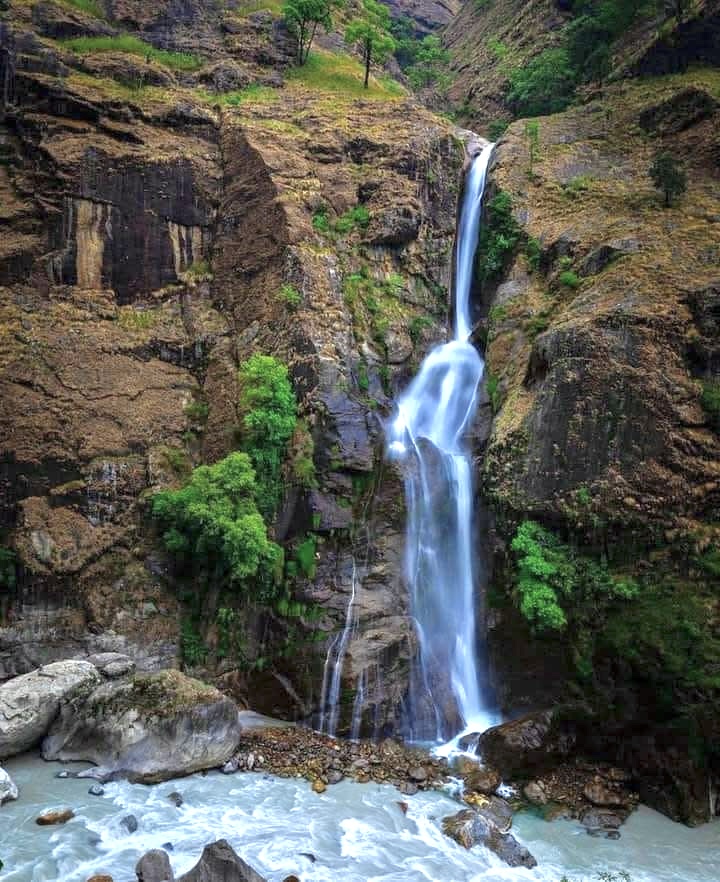
The early days of the Annapurna Circuit Ghorepani Trek wind through beautiful valleys, riverside trails, and terraced hillsides lined with traditional Gurung and Tamang villages. These first few days offer a relatively gentle climb, ideal for warming up your legs and lungs. Expect to walk beside the roaring Marsyangdi River, cross thrilling suspension bridges, and pass under waterfalls that cascade right across the trail.
At Trek Curator, we ensure your start is well-paced and immersive. Our team handles logistics so you can focus on what matters, soaking in the view and adjusting to the altitude.
Manang (3,540m) is more than just a rest stop. It is a critical acclimatization point and a charming mountain town nestled in the lap of giants. After several days of steady ascent, spending a full day here helps your body adjust to the thinning air before tackling higher altitudes.
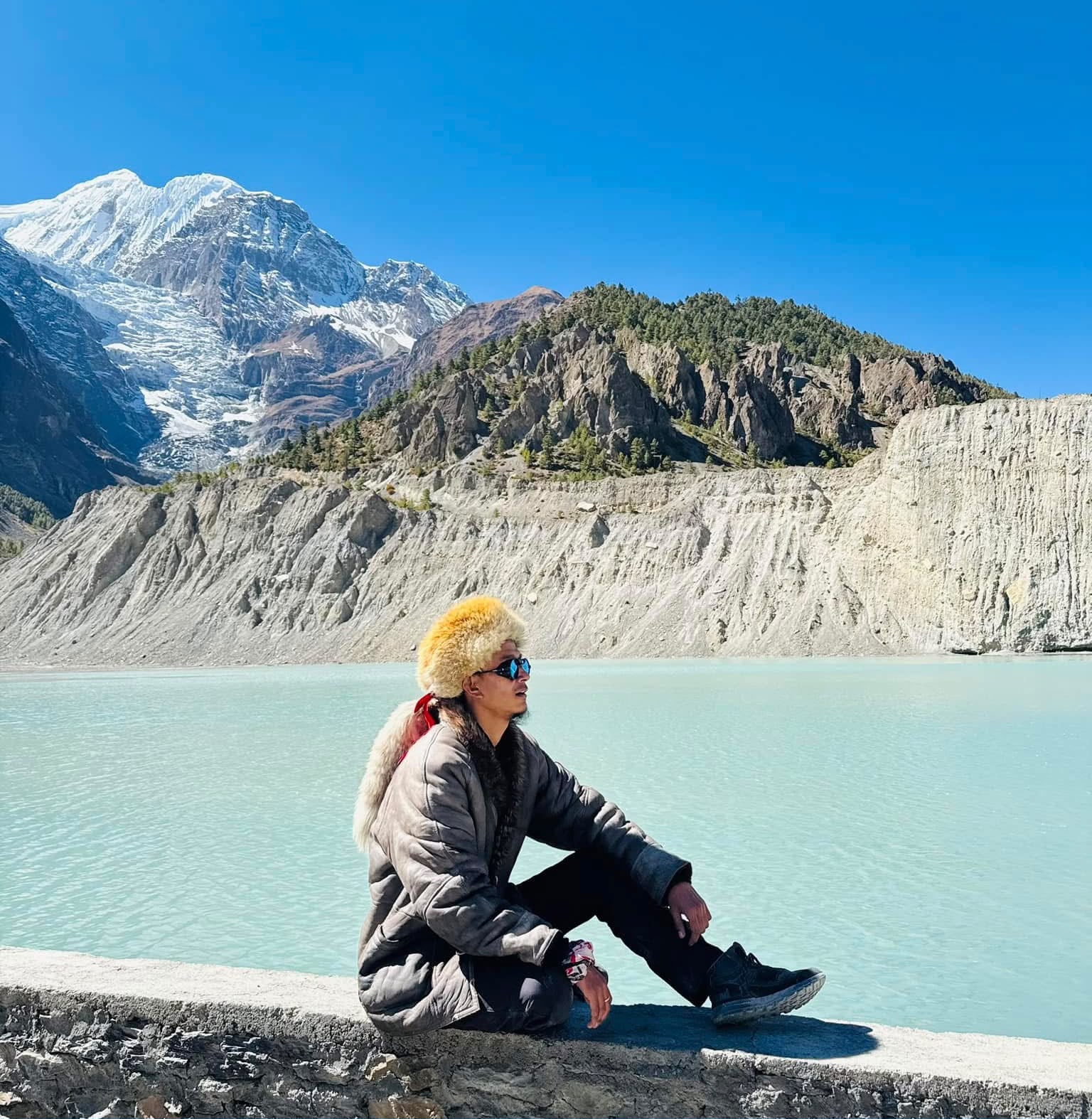
While you’re in Manang, you are not just killing time; you’re exploring. Take a side hike to Gangapurna Lake, visit the ancient Braga Monastery, or trek up to Ice Lake (Kicho Tal). These hikes provide both acclimatization benefits and panoramic views that are simply unforgettable.
Trek Curator organizes acclimatization in a way that feels like an experience, not a pause. You’ll receive guidance on optional hikes, dietary suggestions, and even cultural insights from our experienced local guides.
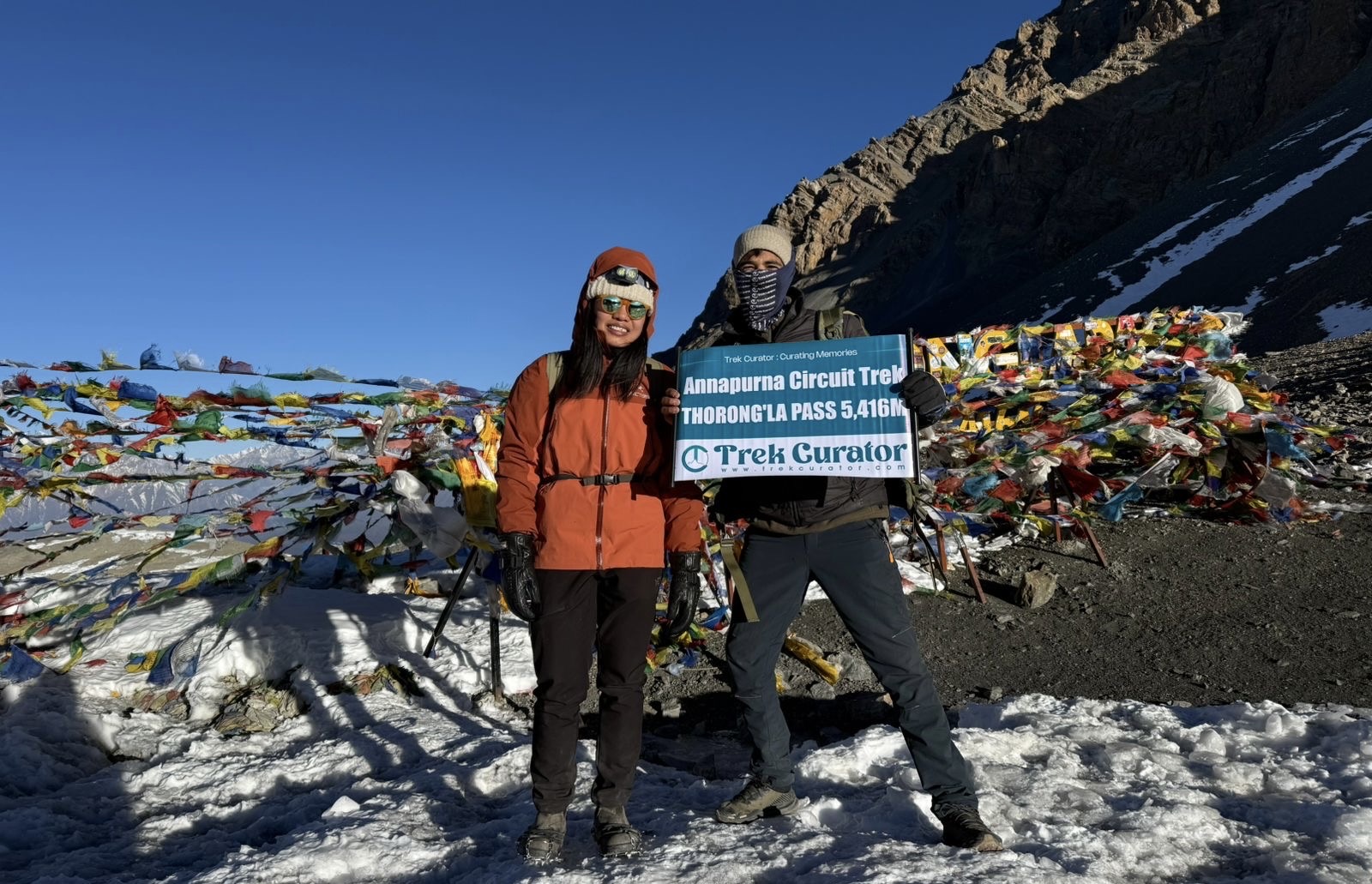
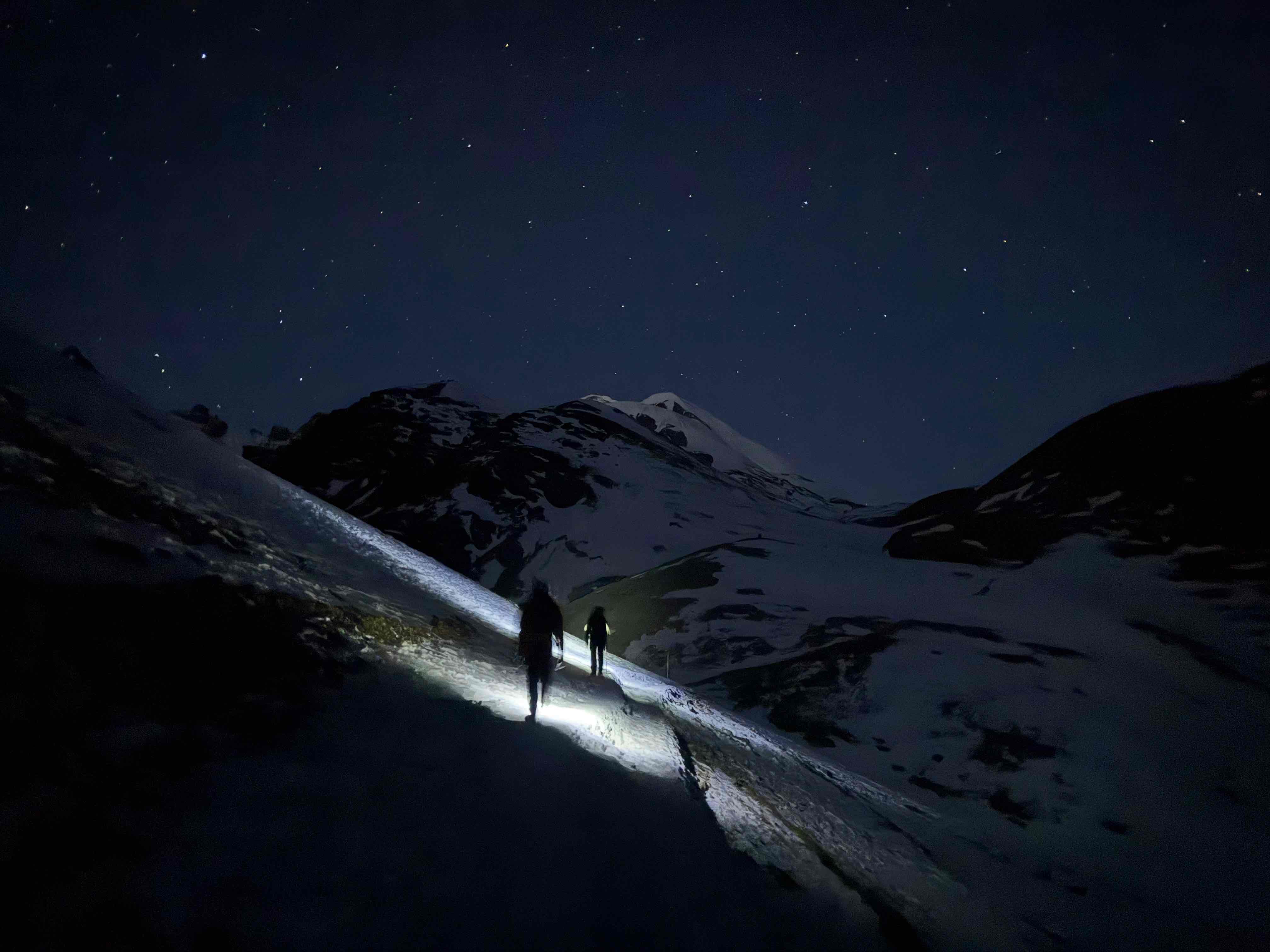
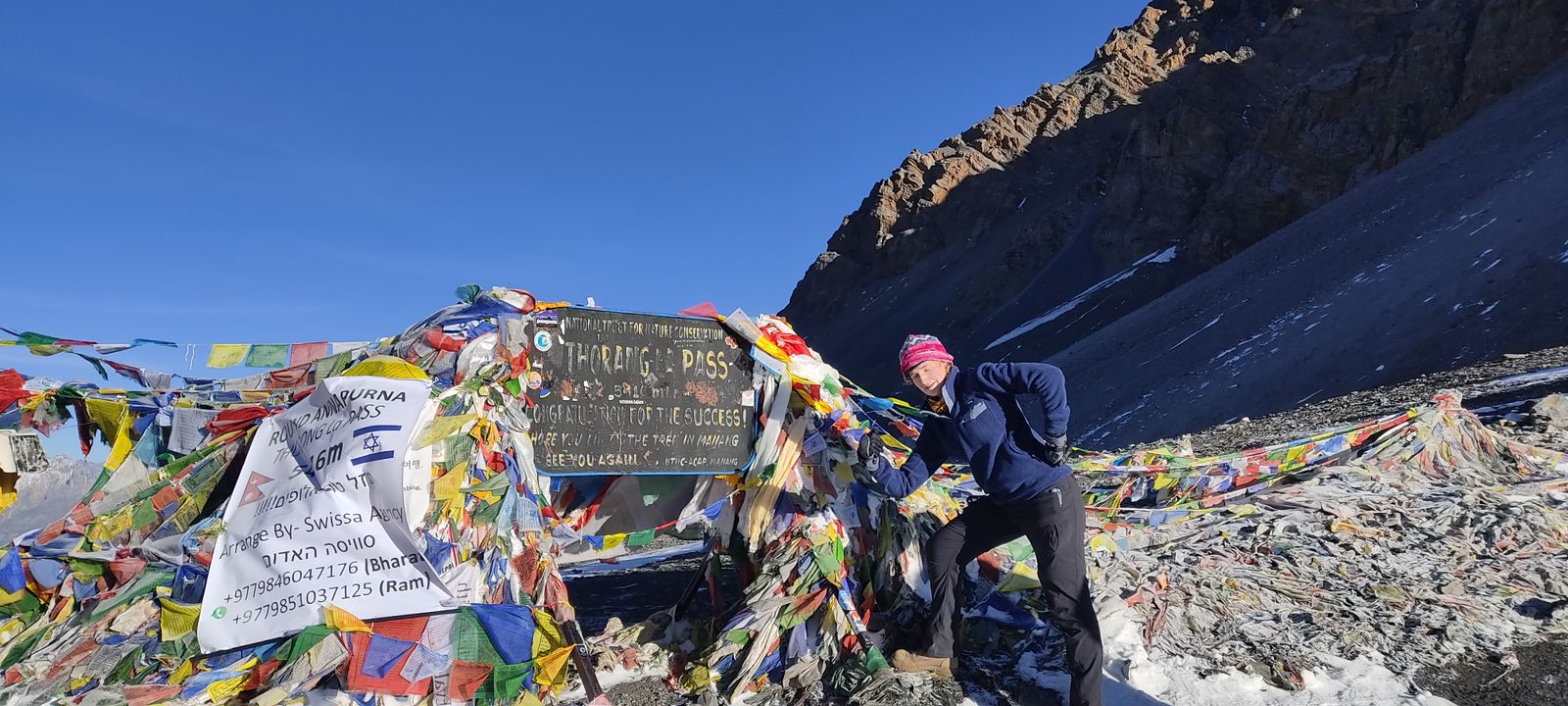
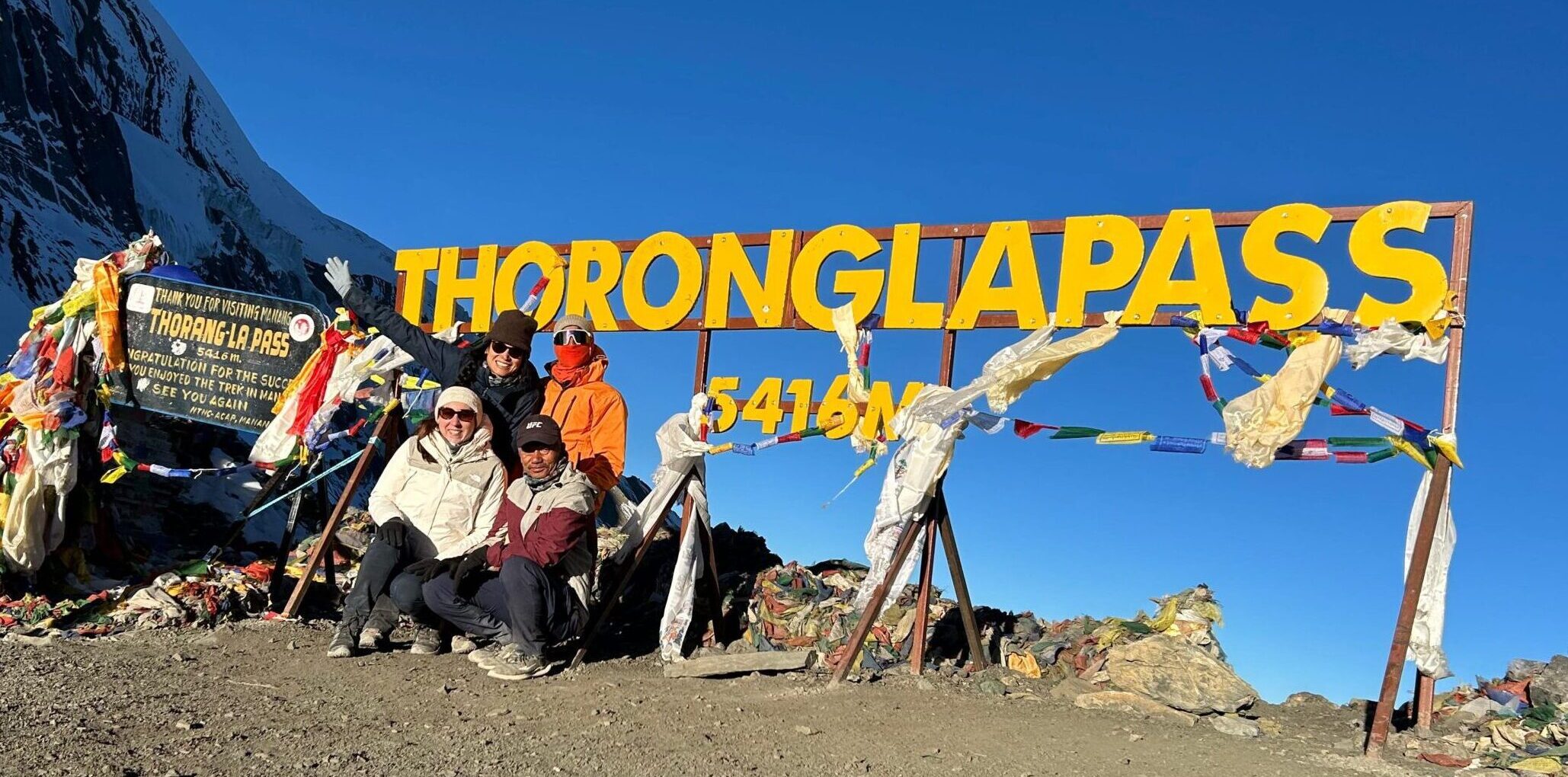
Reaching Thorong La Pass (5,416m) is, without question, the highlight and the biggest challenge of the Annapurna Circuit. It is the highest point of the trek, and crossing it requires an early start (usually around 4 AM), a steady pace, and a lot of determination.
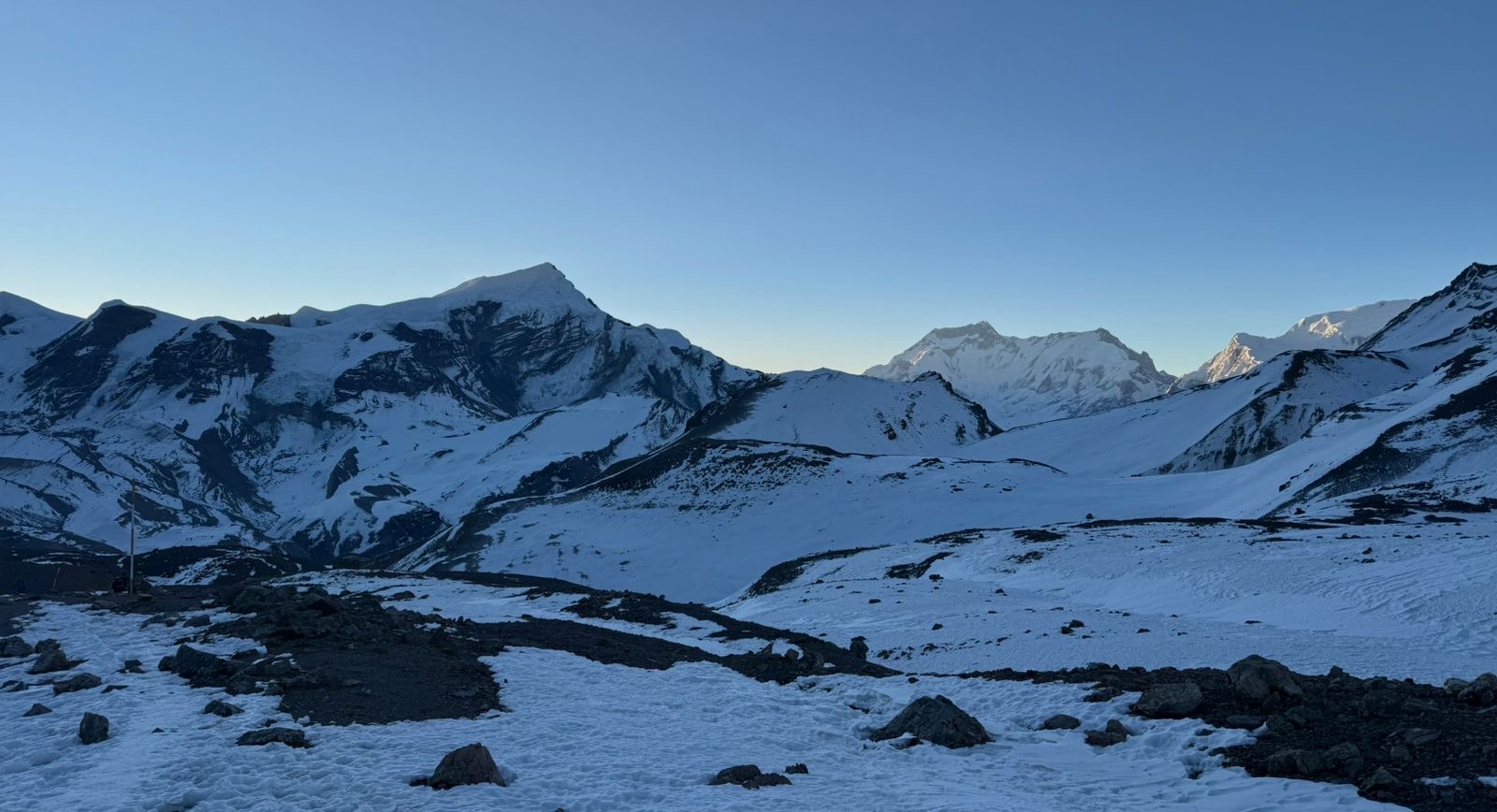
But trust us, it is worth every step. As you reach the summit, you will be greeted by flapping prayer flags, a 360-degree Himalayan panorama, and a deep sense of achievement. The sense of camaraderie among trekkers at the top is heartwarming, especially after such a demanding ascent.
Safety is paramount here, and Trek Curator doesn’t leave anything to chance. We monitor weather conditions daily, guide you with experienced hands, and always have contingency plans ready in case of altitude-related issues.
The descent from Thorong La leads you to Muktinath, a sacred pilgrimage site revered by both Hindus and Buddhists. Here, flames emerge from natural gas vents and icy holy water flows from 108 spouts. Whether or not you’re spiritual, there is something profoundly peaceful about this place.
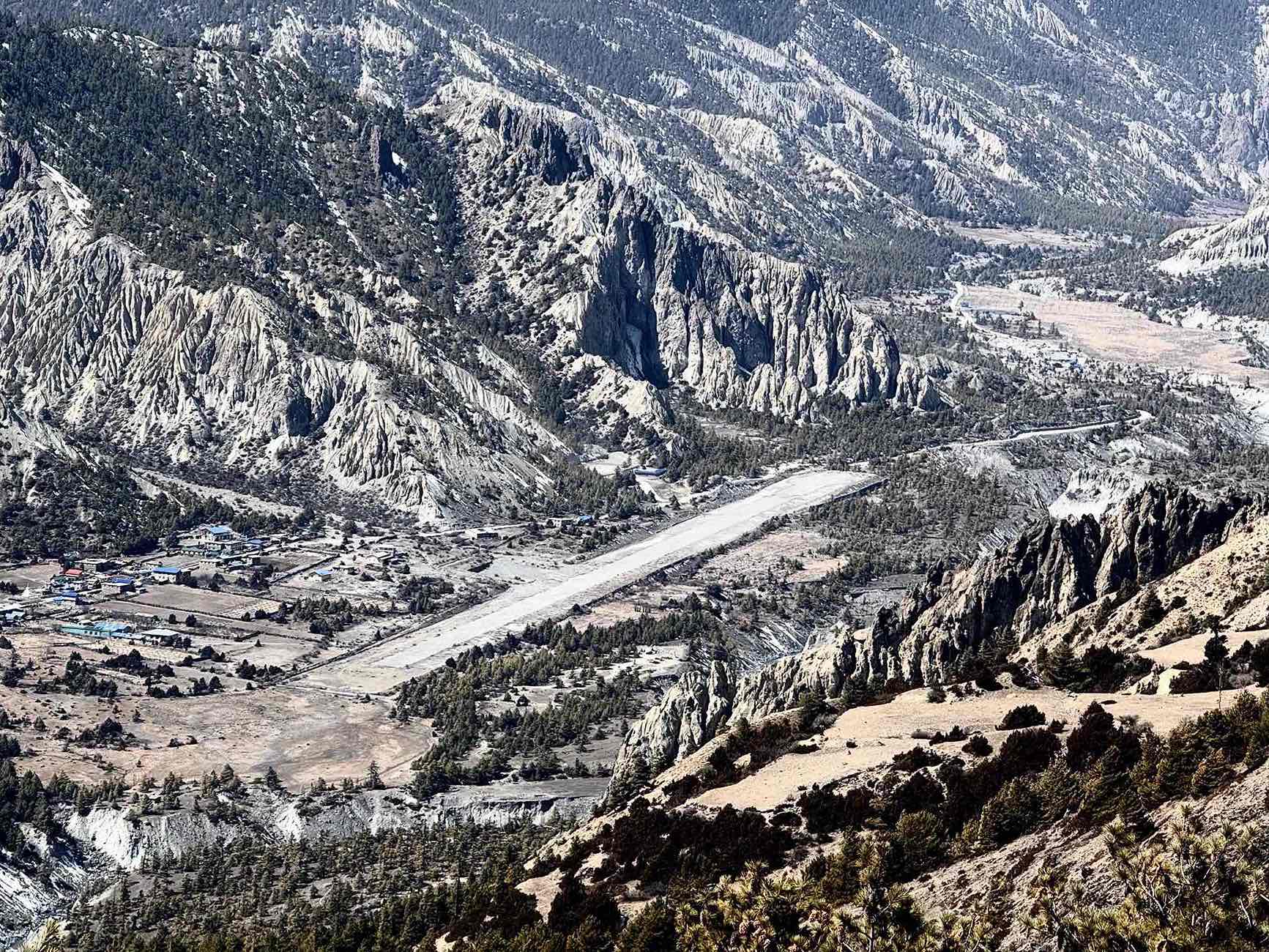
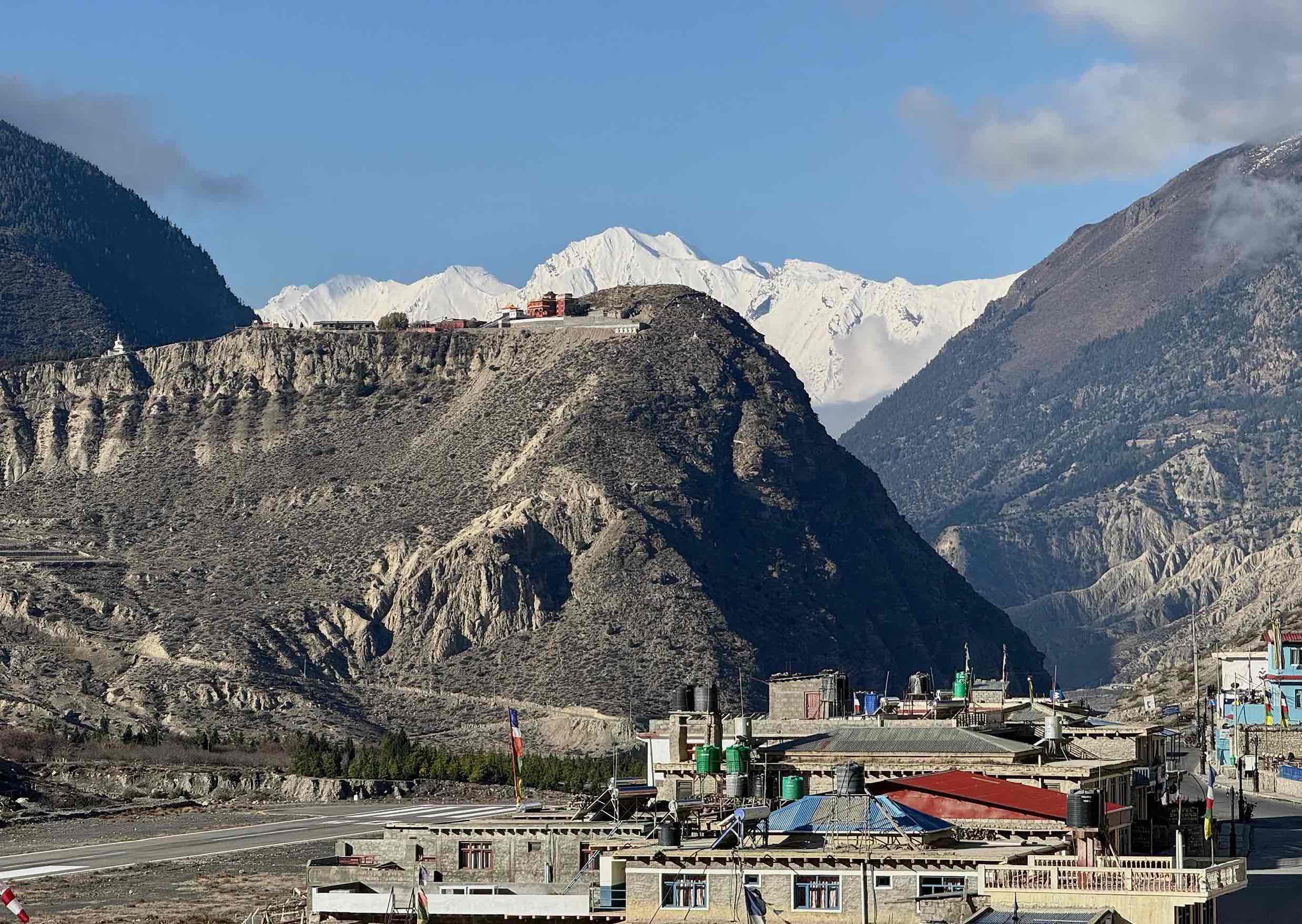
From Muktinath, the trail joins with a road that eventually leads you to Jomsom. From where many trekkers choose to fly or drive to Pokhara, Nepal’s lakeside paradise. After days of high-altitude trekking, Pokhara offers the perfect setting to unwind: massage centers, cozy cafes, serene lakeside strolls, and, of course, celebratory dinners with fellow trekkers.
With Trek Curator, your journey does not end at the pass. It continues smoothly to Pokhara, with your comfort, logistics, and little celebratory touches taken care of.
The Annapurna Circuit Ghorepani Trek is not just a trek; it is a story you will tell for a lifetime. And with Trek Curator by your side, it becomes a seamless, safe, and soul-stirring adventure. Whether you’re a first-time trekker or a seasoned high-altitude hiker, we will tailor the experience to suit your pace and preferences.
Let Trek Curator craft your Himalayan story. Get in touch today.
Day 1: Arrival at Tribhuvan International Airport in Kathmandu and Transfer to Hotel (1,400m)
Day 2: Drive to Dharapani from Kathmandu (1,960m) – Approx. 220 km / 9-10 hours
Day 3: Trek to Chame (2,650m) – Approx. 15 km / 5–6 hours
Day 4: Trek to Upper Pisang (3,300m) – Approx. 13.5 km / 5–6 hours
Day 5: Trek to Ngawal (3,660m) – Approx. 11 km / 5–6 hours
Day 6: Trek to Manang via Bhraka (3,540m) – Approx. 9 km / 4–5 hours
Day 7: Acclimatization Day at Manang Village (3,540m)
Day 8: Trek to Yak Kharka (4,050m) – Approx. 10 km / 4–5 hours
Day 9: Trek to Thorong Phedi (4,525m) – Approx. 7 km / 3–4 hours
Day 10: Trek to Muktinath via Thorong La Pass (5,416m) – Approx. 15 km / 7–9 hours
Day 11: Drive to Tatopani via Jomsom (1,200m) – Approx. 6–7 hours by shared vehicle
Day 12: Trek to Ghorepani (2,860m) – Approx. 17 km / 7–8 hours
Day 13: Sunrise at Poon Hill (3,210m), Trek to Birethanti, and Drive to Pokhara – Approx. 15 km trek / 1.5 hr drive
Day 14: Drive Back to Kathmandu – Approx. 200 km / 6–7 hours
Day 15: Final Departure

Guide & Porter Services:
Hire a guide and porter to carry your luggage and lead the way.
Trekking Equipment Rentals:
Sleeping bags, down jackets, and trekking gear available for rent
Porter Weight Limit:
Each porter carries a maximum of 20–25 kg, usually shared between two trekkers.
Weather Delays:
The itinerary may change due to weather conditions, particularly around Thorong La Pass.
Cash Required:
ATMs are unreliable beyond Manang; trekkers should carry sufficient Nepali cash for the duration of the trek.
Trail Conditions:
Some sections of the trail follow motor roads; alternative trekking routes are used where available.
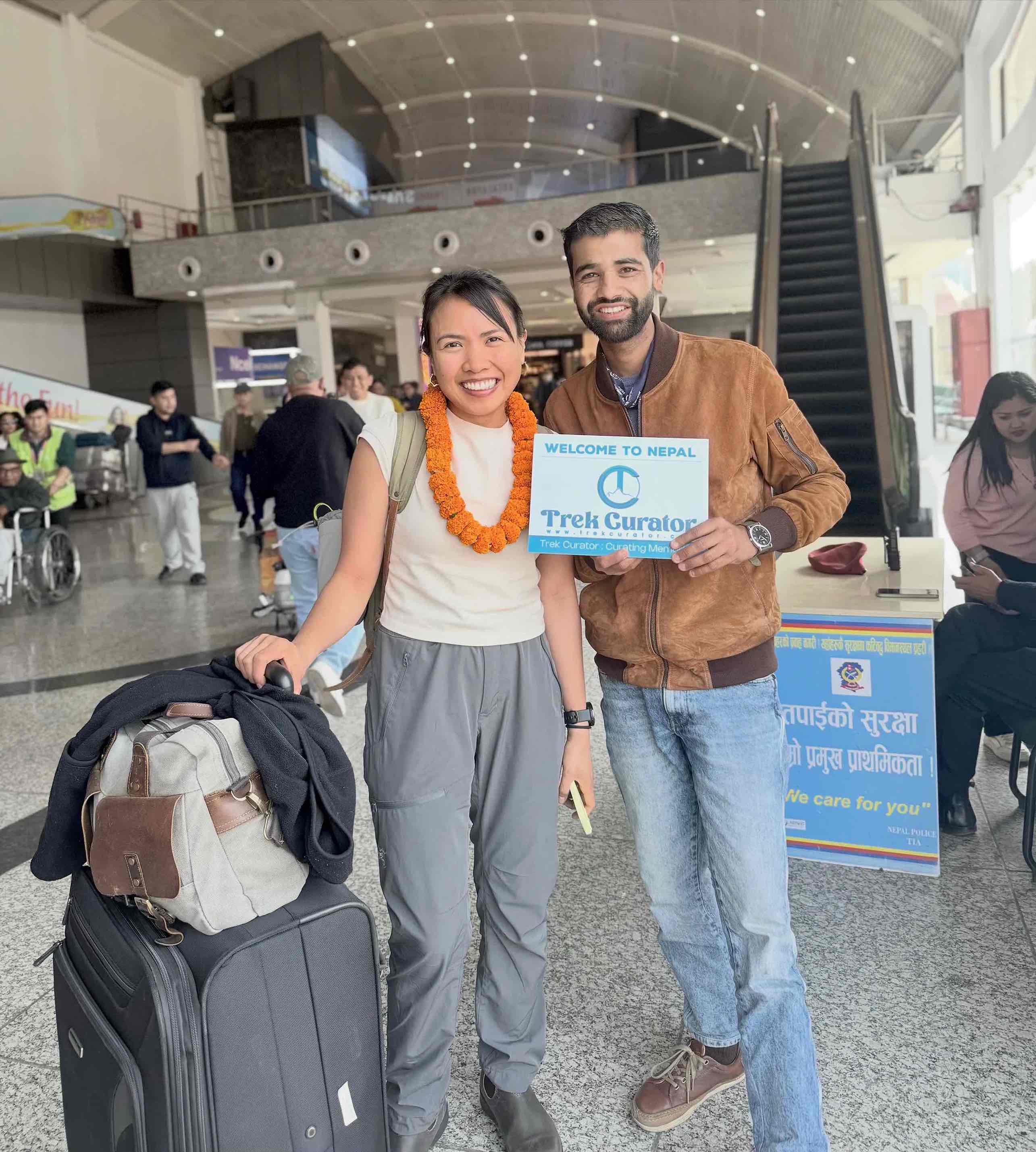
Welcome to Nepal! Upon your arrival at Tribhuvan International Airport in Kathmandu, a friendly representative from Trek Curator will greet you with a warm Nepali welcome and assist with your transfer to a comfortable hotel in Thamel, the vibrant tourist hub of the city. The rest of the day is yours to relax and recover from your flight. You can explore the bustling lanes filled with trekking shops, local eateries, and cultural landmarks. In the evening, join us for a short pre-trek briefing where you will meet your guide and go over the journey ahead.
Your adventure begins early as we set off on a scenic private vehicle journey from Kathmandu to Dharapani, located in the Manang district. The drive initially follows the Prithvi Highway alongside the Trishuli and Marsyangdi Rivers, offering glimpses of terraced fields, distant snow-capped peaks, and traditional villages. After a lunch stop en route, the road becomes more rugged as we ascend through winding mountain paths past Besisahar and Jagat before reaching Dharapani by late afternoon or early evening. You will check into a cozy teahouse, unwind, and enjoy a hearty meal as you prepare to start trekking tomorrow.
After a filling breakfast, you will begin your first day of trekking through beautiful pine forests, climbing steadily along the Marsyangdi River. The trail passes through Bagarchhap, where you’ll notice a shift in architecture and culture as Tibetan influences begin to appear. Continuing past Danaque, a steady climb leads to Timang, a perfect lunch spot with stunning views of Manaslu (8,163m). From here, the trail becomes gentler as you pass by apple orchards and peaceful forests before arriving in Chame, the administrative center of Manang. Here, enjoy your first views of Lamjung Himal, relax in the hot springs nearby, and rest in a well-equipped lodge.
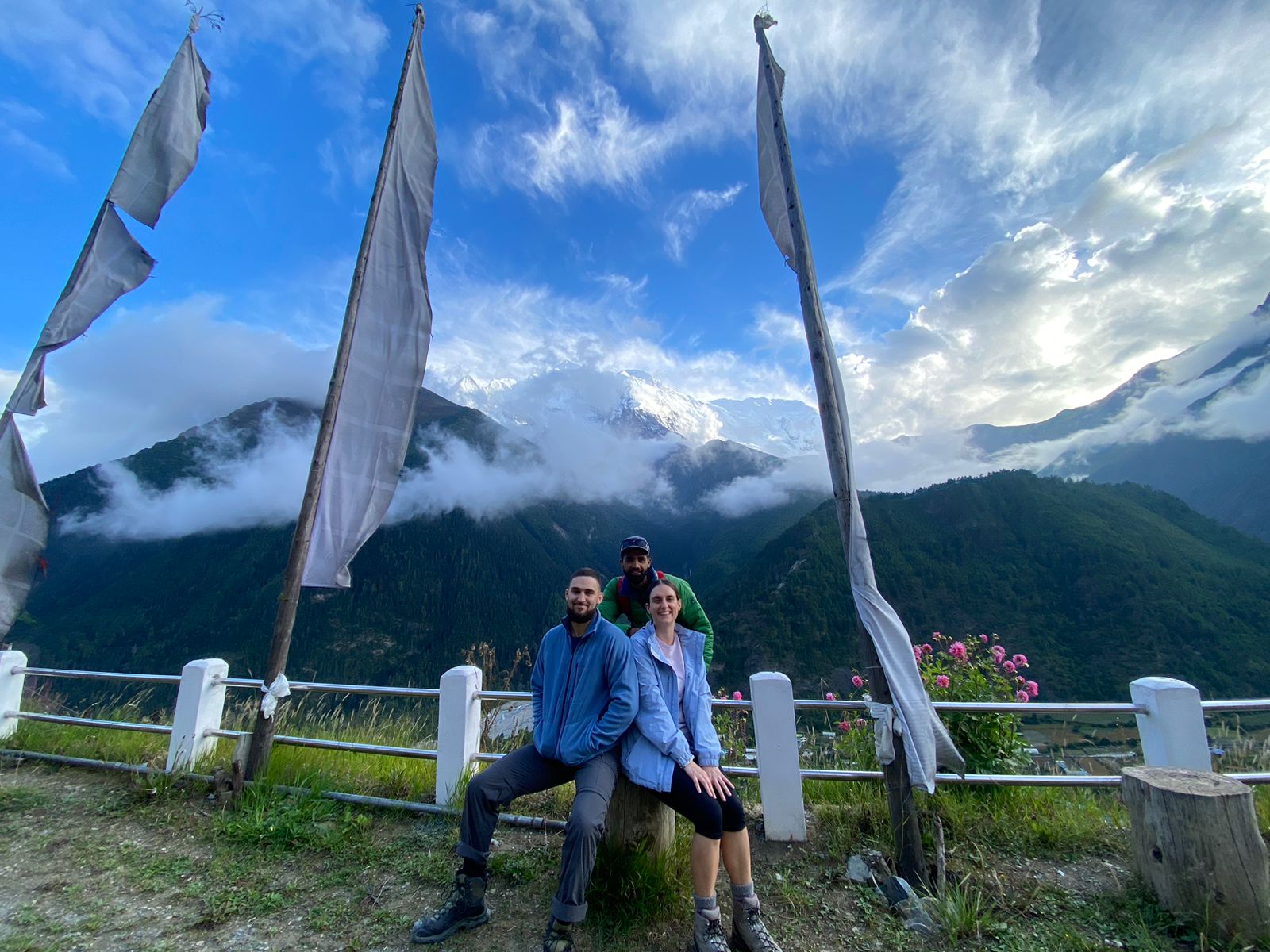
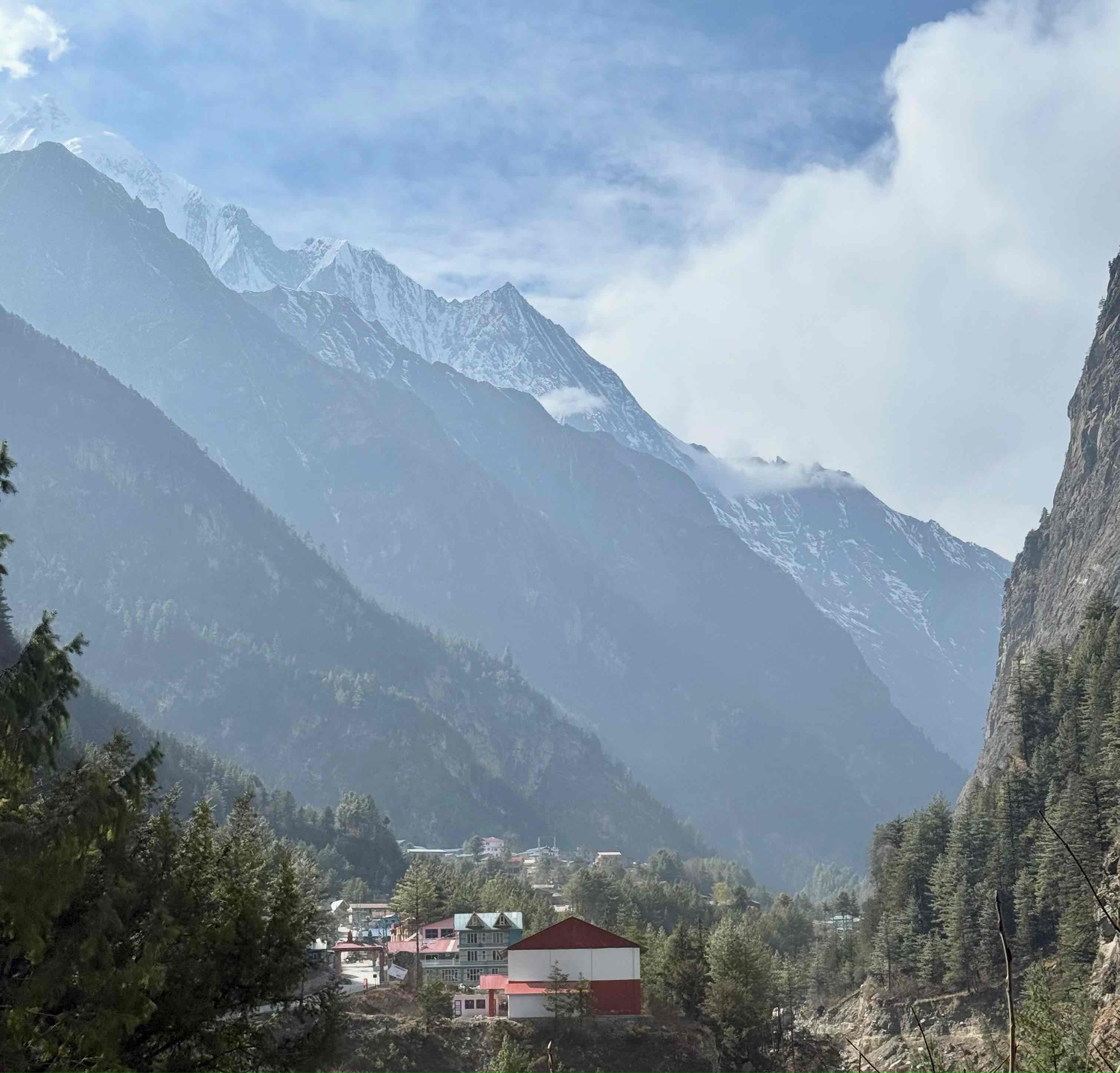
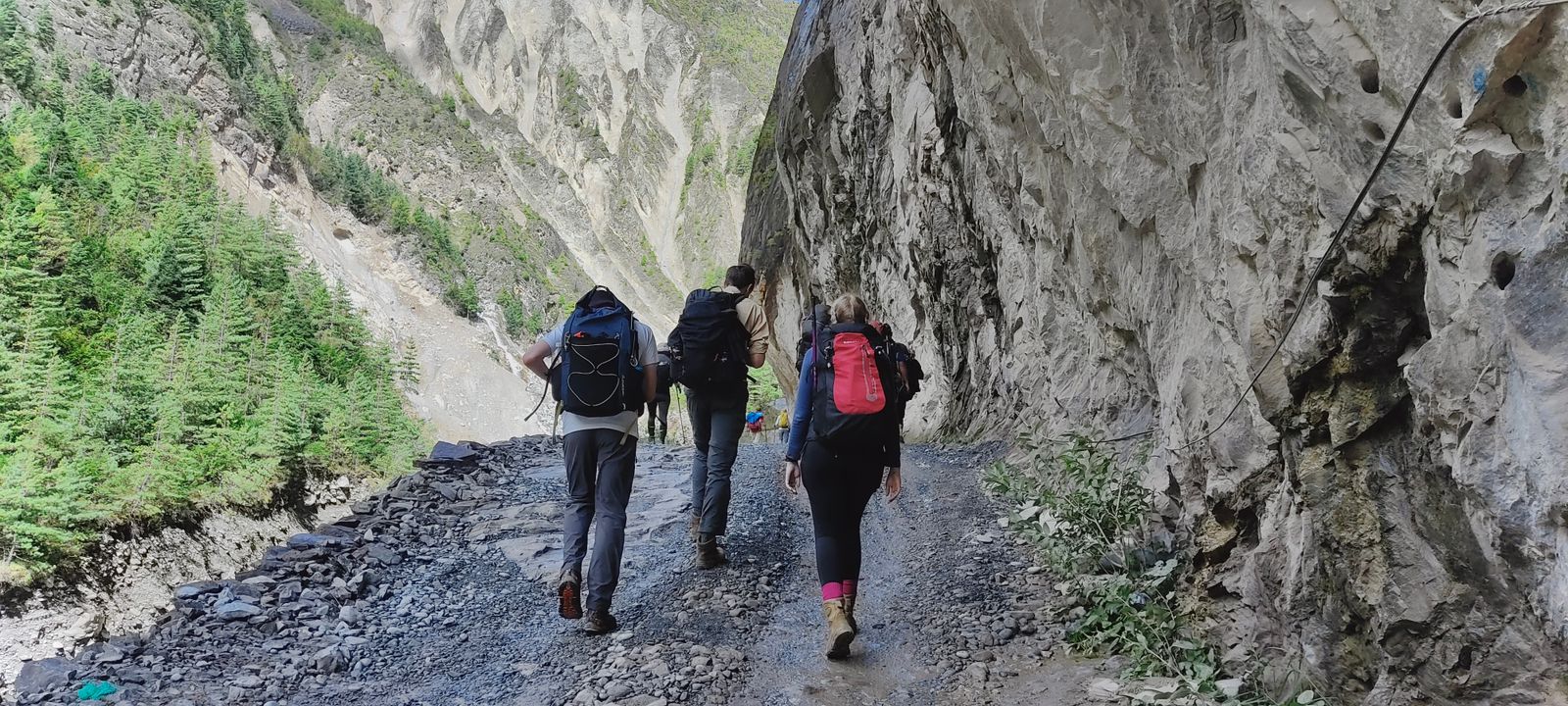
Today’s trek leads through a lush forest as you gradually ascend to Bhratang, a scenic riverside village known for its apple farm. After crossing a dramatic suspension bridge over the Marsyangdi, you begin a steady climb through a narrow gorge where the trail has been carved into the cliffside, a thrilling highlight. The path eventually opens into the wide valley of Dhukur Pokhari, where you will stop for lunch. After a brief rest, you will head up towards Upper Pisang, a traditional village offering excellent views of Annapurna II and IV. The higher altitude here supports acclimatization and sets the stage for the cultural richness ahead.
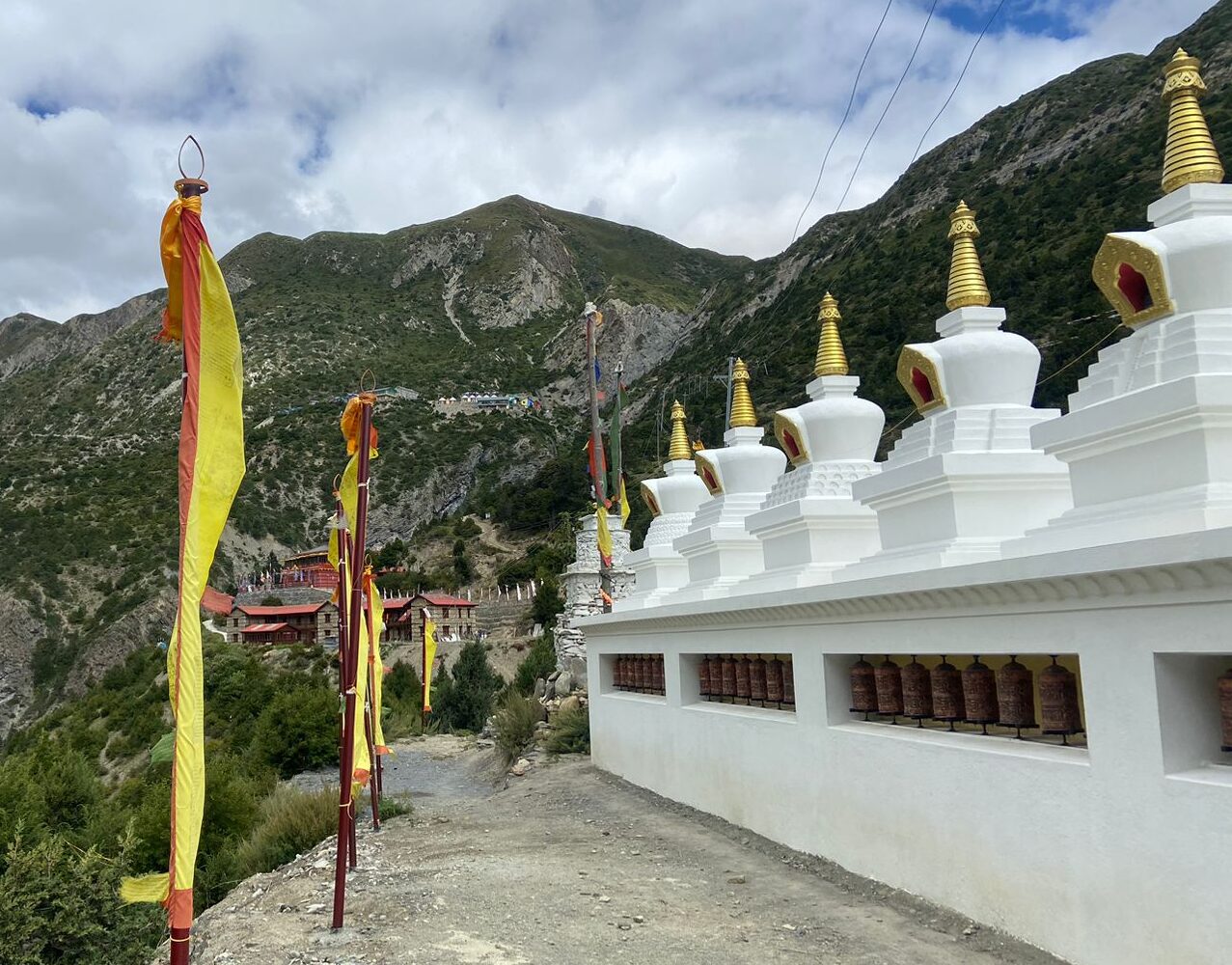
Start your day with a gentle climb through arid terrain, passing prayer wheels and ancient mani walls. This high-altitude route via Ghyaru is tougher but incredibly rewarding, with panoramic views of the Annapurna range, Tilicho Peak, and the deep valley below. Ghyaru makes a great spot for a tea break while soaking in the views. From here, the trail continues through the upper route to Ngawal, a village steeped in Tibetan Buddhist culture. Unlike the lower route, this path is quieter, more authentic, and helps with acclimatization. In Ngawal, enjoy your evening in a traditional teahouse surrounded by the serenity of the Himalayan highlands.
Today’s trail gently descends from Ngawal, gradually merging with the main trail near Braka (Bhraka), home to an ancient cliffside monastery. We’ll visit the Braka Monastery, one of the oldest in the region, before continuing to Manang, a bustling village nestled beneath the towering peaks of Annapurna III, Gangapurna, and Tilicho. The walk is relatively easy today, giving your body time to adapt to the altitude. Lunch will be enjoyed either in Braka or upon reaching Manang. Upon arrival, take time to rest, stroll through the village, and prepare for tomorrow’s acclimatization hike.
To adjust properly to the altitude, today is a rest and acclimatization day in Manang. But don’t worry, you won’t be idle. After breakfast, join a short but steep acclimatization hike to either Gangapurna Lake or the 100 Rupee Lama viewpoint, which offers incredible panoramic views of the glaciers and peaks. For the more adventurous, a longer hike to Ice Lake (Kicho Tal) is also an option, taking about 5–6 hours round trip. The day is designed to help your body prepare for the high pass ahead. Spend your afternoon exploring the Himalayan Rescue Association center, chatting with locals, or simply relaxing with a warm drink in a lodge overlooking the mountains.
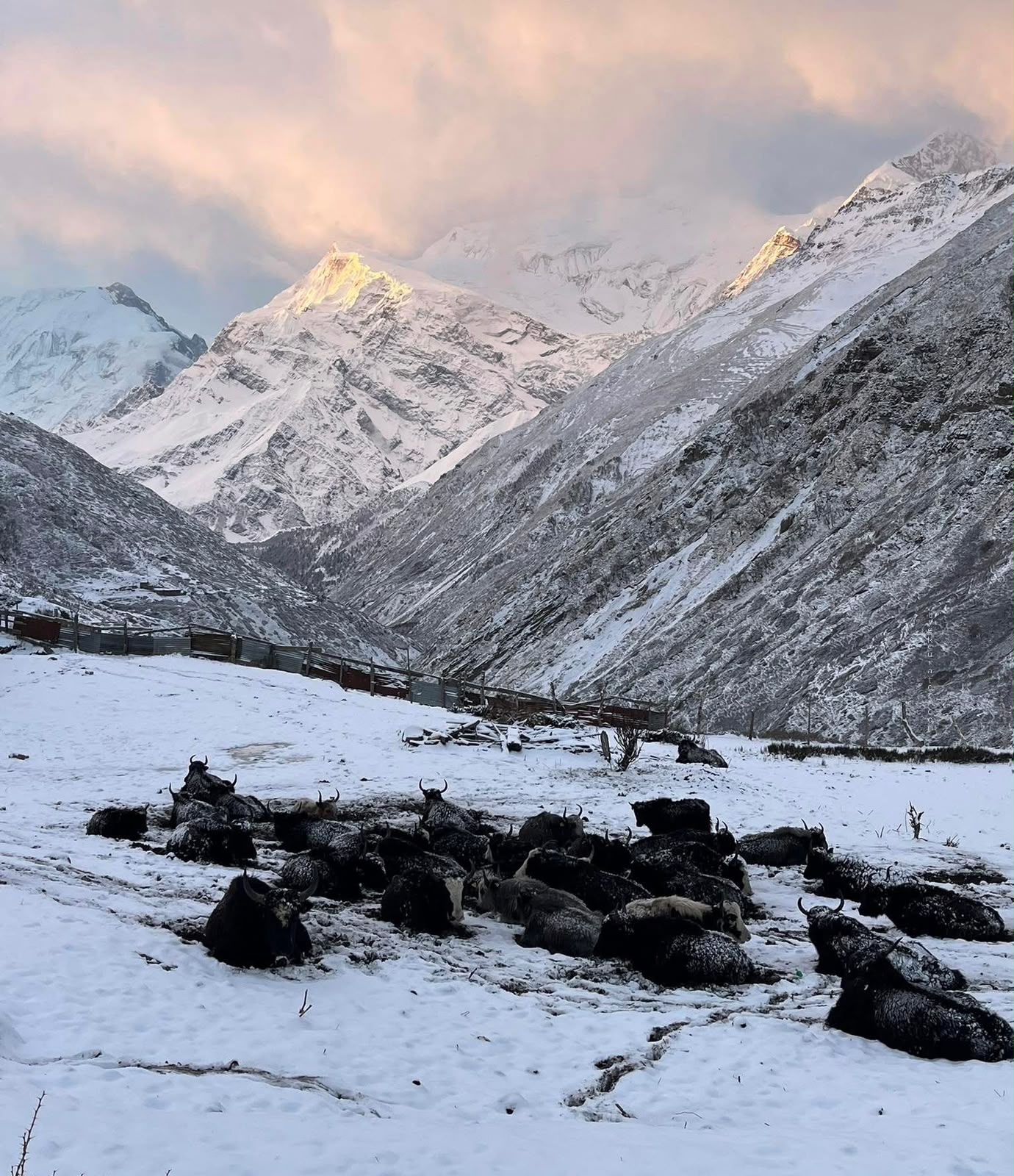
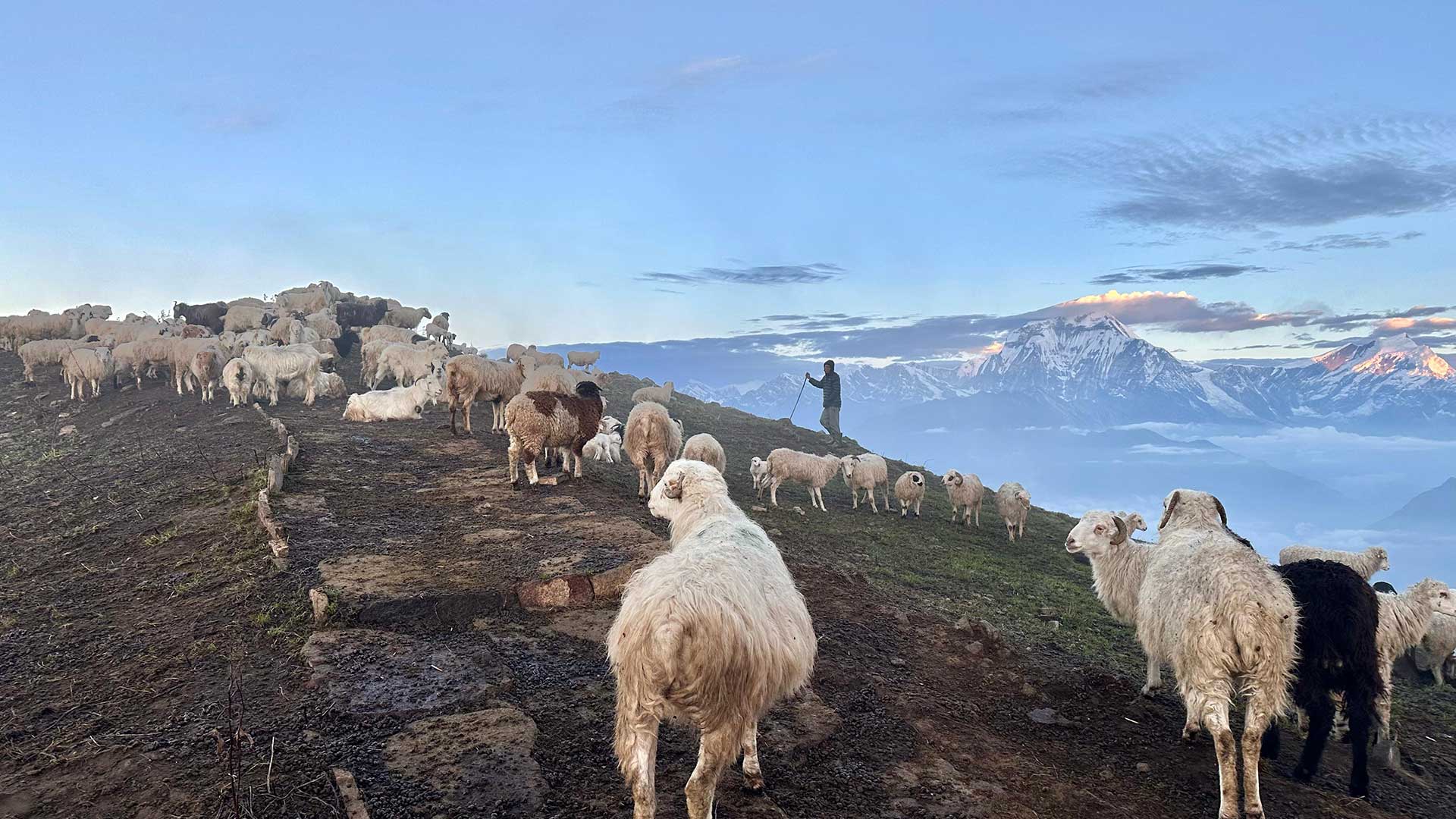
With the terrain becoming more barren, today’s trek moves into alpine zones where you’ll see grazing yaks and dry stone houses. The trail ascends gently through Tengi and Gunsang, passing juniper bushes and open meadows. After crossing a wooden bridge over the Jarsang Khola, you’ll arrive in Yak Kharka, a small collection of lodges set against the rugged Himalayan backdrop. Lunch is usually enjoyed at Gunsang or after arriving in Yak Kharka. The shorter trek today allows for more rest at higher altitudes, supporting better acclimatization.
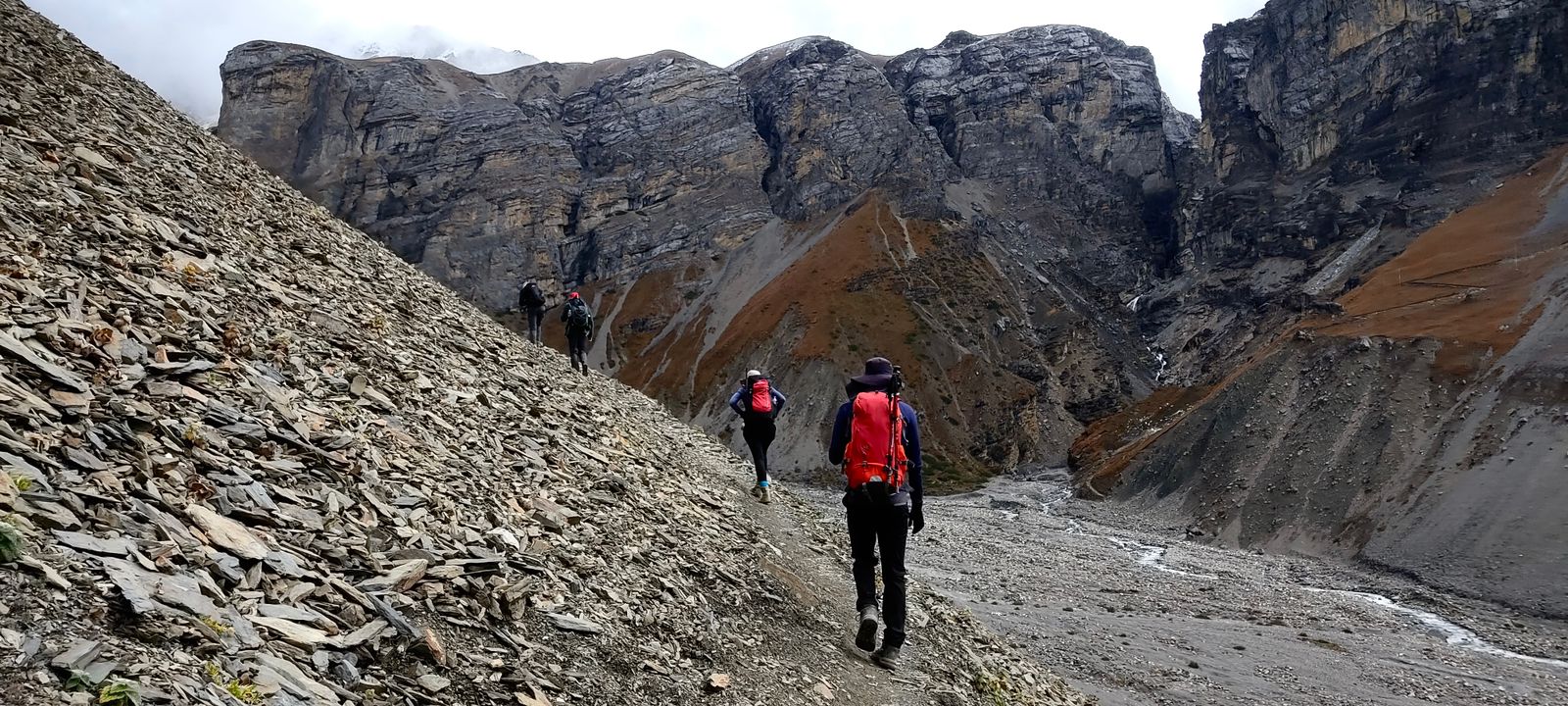
Today’s journey is relatively short but crucial as you approach the foot of Thorong La Pass. The trail climbs gradually through rocky terrain, crossing a landslide-prone section with care before reaching Thorong Phedi, the base camp for tomorrow’s pass crossing. Some may choose to hike an hour further to High Camp (4,800m) for a better head start the next day, though we recommend resting in Phedi for better sleep and oxygen levels. After lunch, take it easy, hydrate well, double-check your gear, and sleep early in preparation for the big day.
Rise early, around 4 AM, for a headlamp-lit ascent to Thorong La Pass, the highest point of the trek at 5,416m. The climb is steady but steep and can be challenging due to the cold and thin air. After about 3–5 hours of climbing, you will reach the top, greeted by fluttering prayer flags and breathtaking 360° mountain views. After photos and celebration, begin your descent to Muktinath (3,760m), a sacred pilgrimage town revered by both Hindus and Buddhists. Lunch is usually taken en route at Charabu, halfway down. Muktinath’s sacred temple and eternal flame are fascinating to visit in the evening after your long day.
This morning, enjoy a hot breakfast before boarding a shared local jeep for a bumpy yet scenic drive through the Kali Gandaki Gorge, the world’s deepest. You will pass through Jomsom, the windy administrative hub of Mustang, and descend gradually through Marpha, famous for its apples and brandy. Continuing further south, the landscape transforms from barren to subtropical as you reach Tatopani, meaning “hot water.” After checking in, soothe your tired muscles in the natural hot springs by the river, an absolute treat after the previous day’s high-altitude exertion.
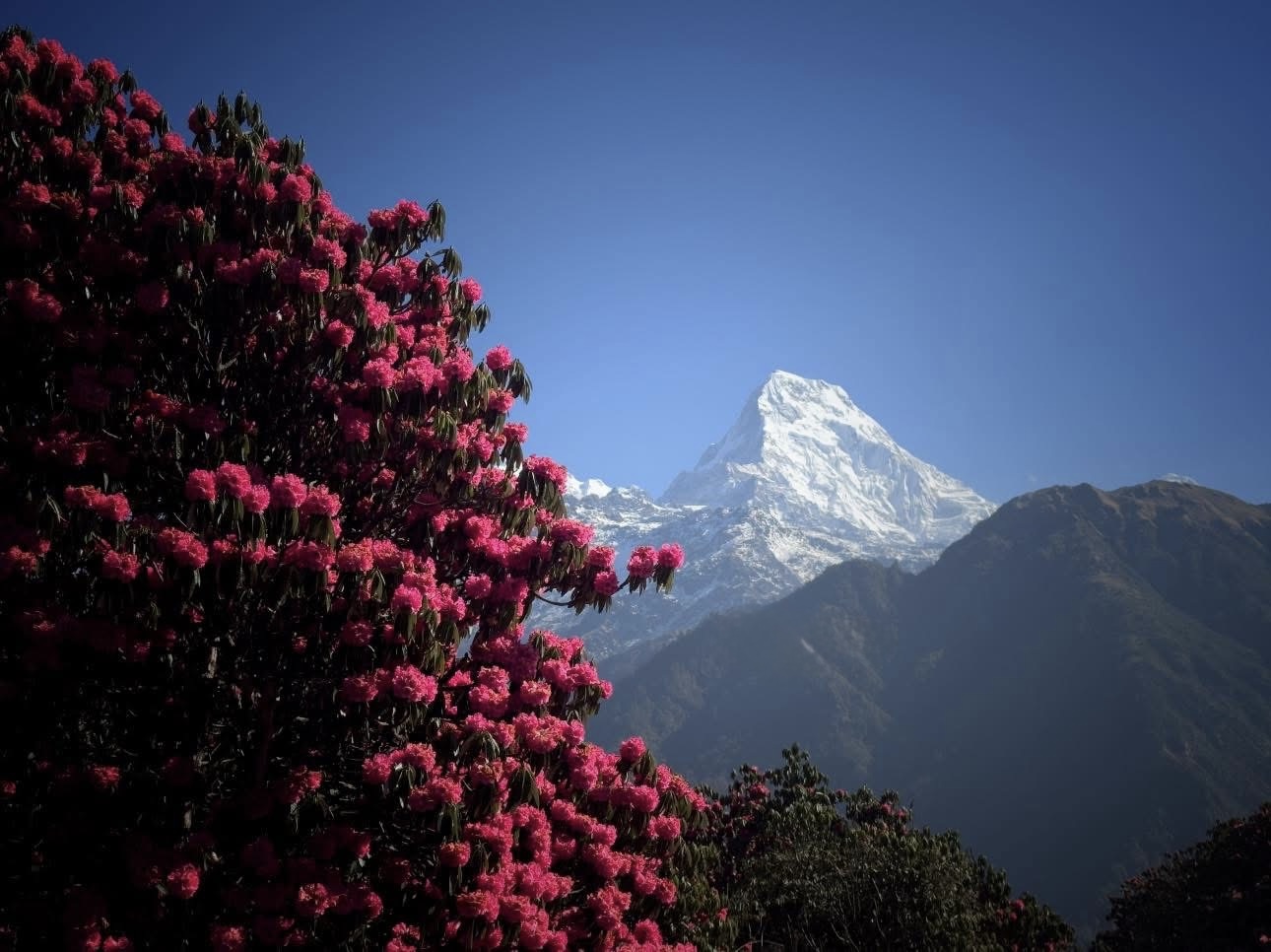
Leaving Tatopani, the trail begins a long ascent through rhododendron forests and traditional Magar villages like Sikha and Chitre. After a lunch stop midway, the climb becomes steeper as you gain over 1,600 meters in altitude. You will arrive in Ghorepani, a charming ridge-top village popular for its sunrise views. Nestled within the Annapurna Conservation Area, Ghorepani is surrounded by rhododendrons that bloom vividly in spring. Your lodge for the night will offer comfortable accommodations and a stunning mountain backdrop.
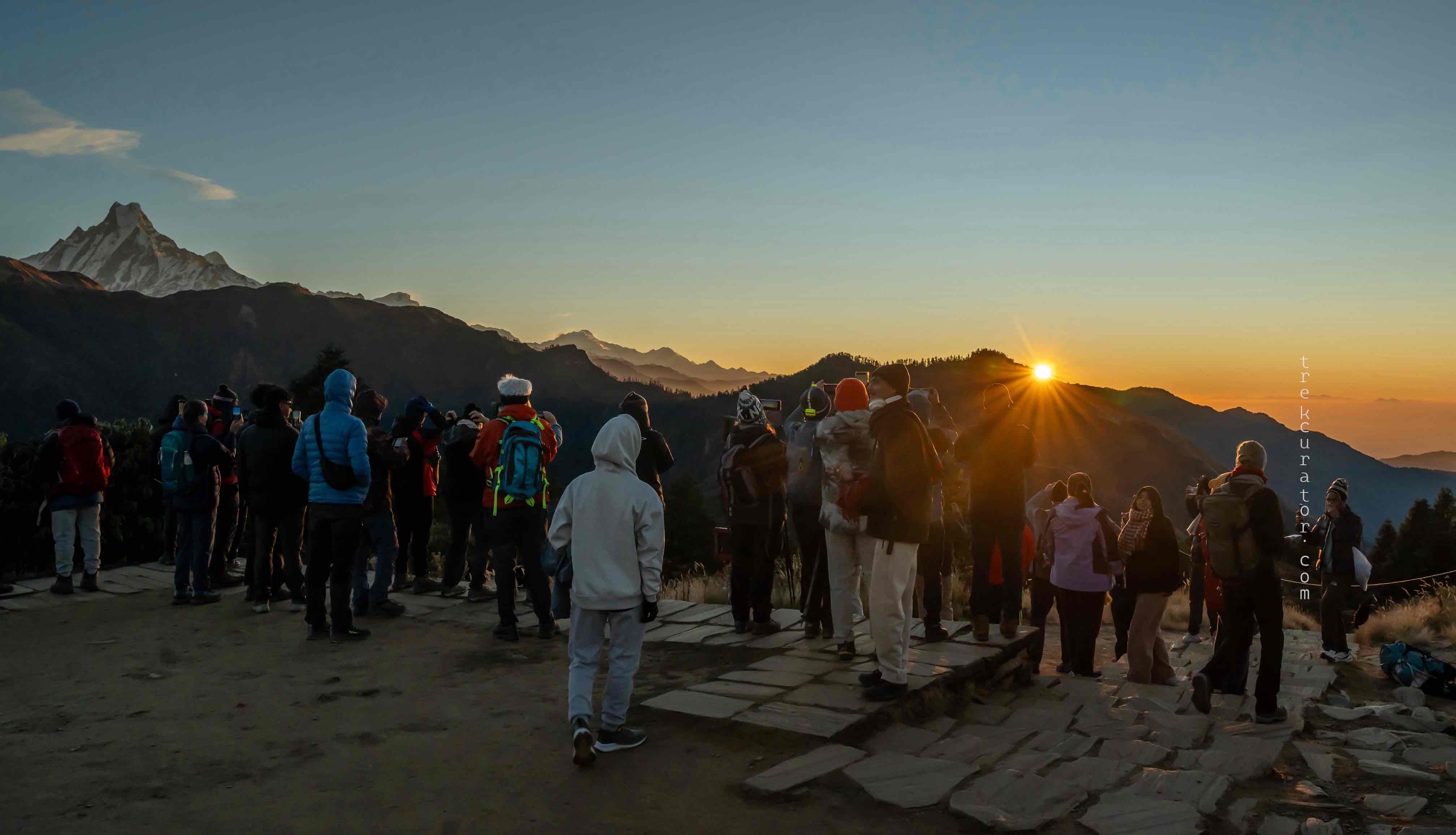
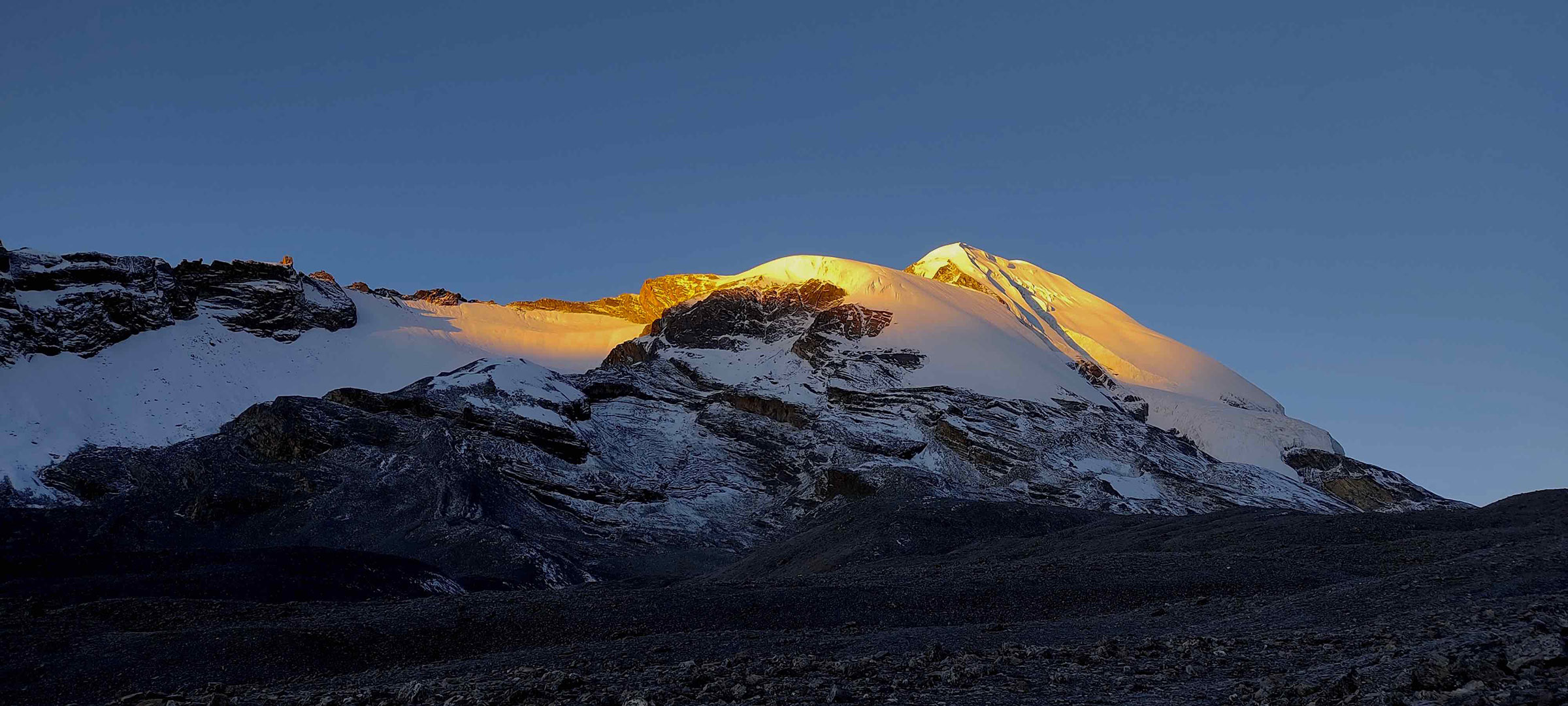
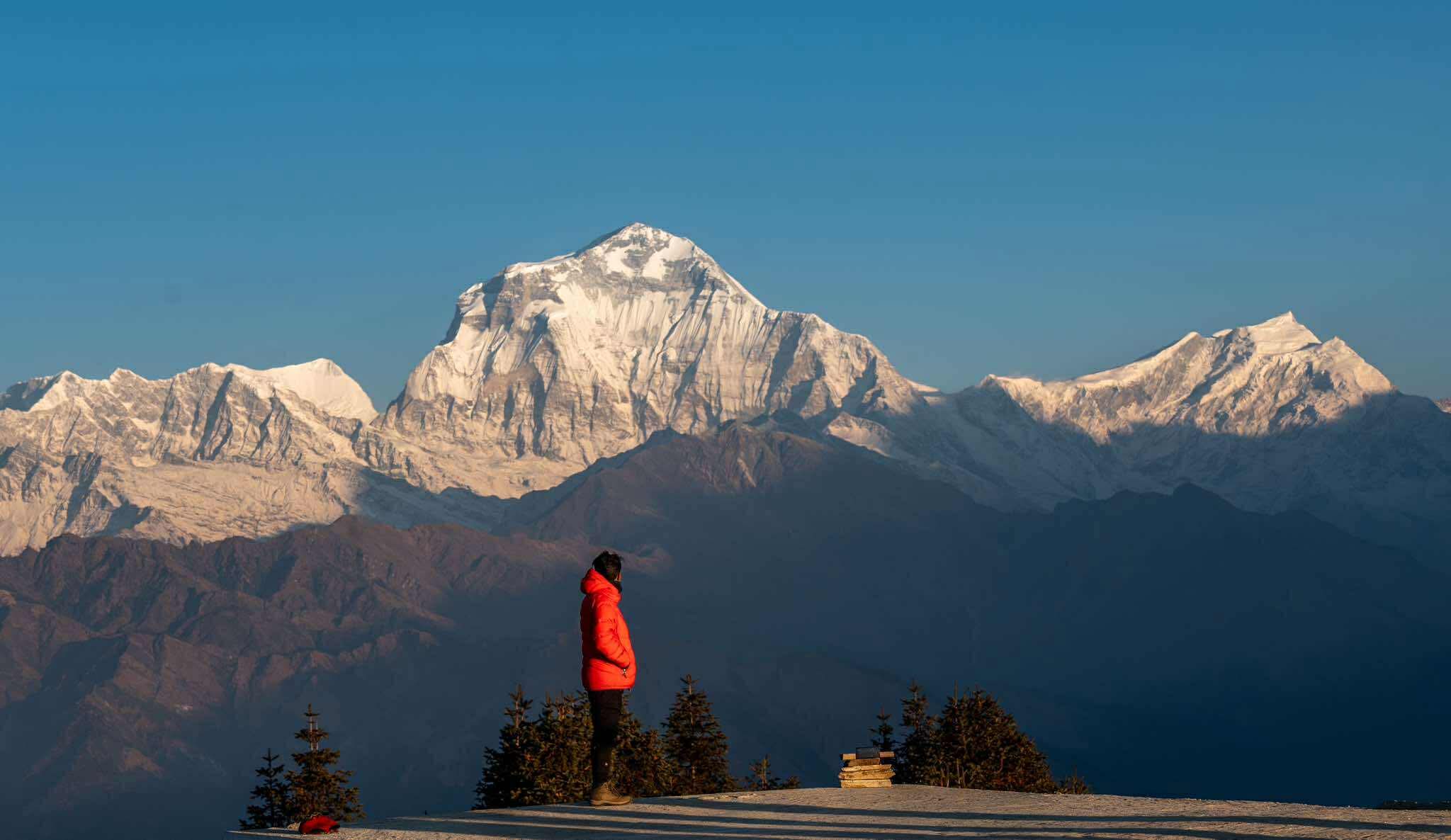
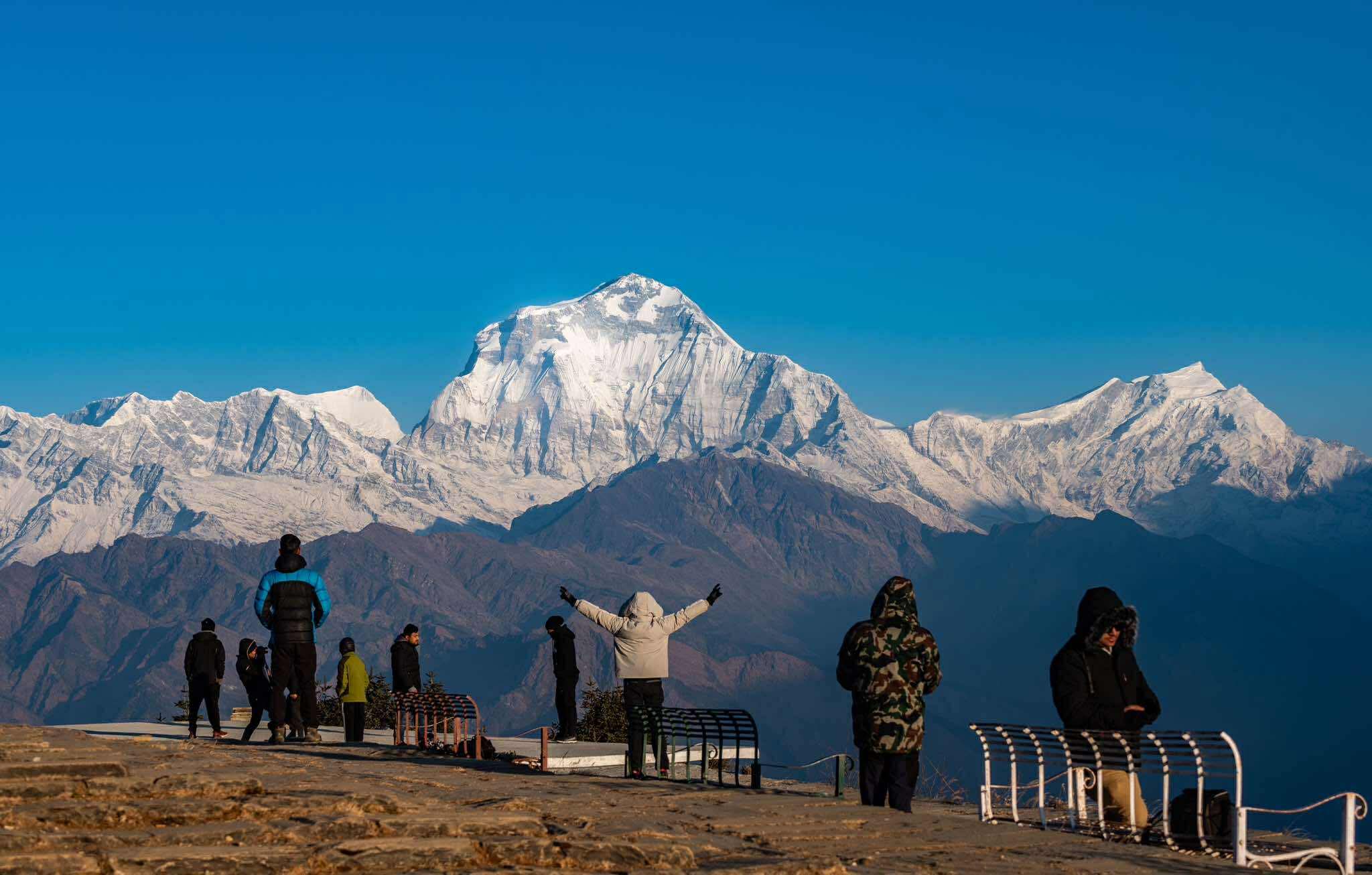
Rise before dawn and hike for about 45 minutes to Poon Hill, one of the most celebrated viewpoints in Nepal. As the sun rises behind Annapurna South, Hiunchuli, and Dhaulagiri, watch the snow-capped peaks bathe in golden light. After capturing these unforgettable moments, return to Ghorepani for breakfast and begin your final descent. The trail winds down through dense forest to Ulleri, known for its steep stone steps, and then eases out towards Birethanti. From there, a private vehicle awaits for a short drive to Pokhara (827m), where a hot shower, soft bed, and lakeside dining await you.
After breakfast by Phewa Lake, you will board a comfortable tourist bus for the drive back to Kathmandu. The road retraces the route through green hills, terraced farms, and riverside villages. You’ll arrive in the capital by late afternoon and be transferred to your hotel. In the evening, Trek Curator invites you for a farewell dinner at a local Nepali restaurant, where you can reflect on your journey, share stories, and celebrate your achievements.
After breakfast, our team will assist with your airport transfer. As you say goodbye to Nepal, we hope the memories of the Annapurna Circuit, the mountains, the people, and the sense of accomplishment stay with you forever. Trek Curator thanks you for choosing us to be part of your Himalayan journey, and we hope to welcome you back for another adventure soon. Top of Form
Modify itinerary, accommodation, transportation, or activities according to your travel style and schedule.
The Annapurna Circuit offers one of the most diverse landscapes in the Himalayas. Beginning in the lush, terraced foothills near Kathmandu and gradually rising to the arid, windswept terrain of the trans-Himalayan region, the trek covers everything from subtropical forests to alpine meadows and high mountain deserts. You will witness dramatic elevation shifts, ancient villages, deep gorges, and glacial rivers along the way.
Transportation is arranged with comfort and safety in mind. All long-distance travel, such as the drive from Kathmandu to Dharapani and return from Pokhara, is in private or tourist-standard vehicles arranged by Trek Curator, ensuring a smooth and scenic journey through Nepal’s breathtaking countryside.
At Trek Curator, we believe that the people who accompany you on the trail are just as important as the trail itself. That is why we assign experienced, licensed trekking guides who are not only knowledgeable about the terrain, culture, and safety measures but also fluent in English and trained in high-altitude first aid.
Our friendly porters will carry your main luggage (A duffle Bag is mandatory), allowing you to walk lightly and enjoy the journey more fully. We strictly follow ethical porter treatment policies, each porter carries a manageable load, and is insured. Guides and porters ensure your safety, share stories, and take care of logistics, so you can focus on the adventure.
Throughout the trek, you will be accommodated in cozy mountain lodges and teahouses, all pre-booked by the Trek Curator. While the rooms are generally basic and twin-shared, they are clean and safe, and often offer spectacular mountain views.
Meals on the trek include a mix of traditional Nepali fare like dal bhat, Tibetan-inspired dishes such as momos and Thukpa, and a variety of continental options like pasta, pancakes, and porridge. You will be well-nourished with three meals a day during the trek, and we also accommodate vegetarian and special dietary requirements upon request. In Kathmandu and Pokhara, your stay will be in comfortable tourist-standard hotels with modern amenities.
If you’re looking to enhance your Annapurna adventure, an extension to Tilicho Lake (4,919m), one of the world’s highest lakes, is a must. This detour adds an extra 2–3 days to your itinerary and takes you through rugged, surreal landscapes with incredible views of Tilicho Peak and surrounding giants. The trail from Manang to Tilicho Base Camp and onward to the lake is more demanding, but the reward is unmatched: a pristine turquoise lake nestled in a glacial basin, far from the crowds. Trek Curator can seamlessly customize your itinerary to include this detour with all logistics, safety measures, and accommodations arranged.
Some sections of the Annapurna Circuit, especially between Dharapani and Chame, and Yak Kharka to Thorong Phedi, are known for landslides and rockfall, particularly after monsoon rains. While these risks are seasonal and weather-dependent, Trek Curator takes every precaution, including checking trail conditions daily, adjusting routes when necessary, and ensuring guides are equipped with radios and local contacts for real-time updates. We advise trekkers to follow their guide’s instructions closely, stay on marked trails, and never trek alone in risk-prone sections. Your safety is our top priority.
Booking your Annapurna Circuit trek with Trek Curator is straightforward and transparent. To confirm your trek, a 20–30% deposit is required upon booking, with the balance payable upon arrival in Kathmandu. We accept international bank transfers, cards, or cash.
For documentation, you will need a valid passport (with at least 6 months’ validity), two passport-sized photos, and travel insurance. Our team will handle all necessary trekking permits, including the Annapurna Conservation Area Permit (ACAP) and the TIMS card. Once booked, you will receive a detailed packing list, itinerary, and preparation guide to help you get ready.
For Booking & Cancellation Policy: click here
Although rare, emergencies at high altitudes can happen. That is why Trek Curator includes a robust emergency plan with every trek. All our guides carry first aid kits and are trained in altitude sickness response. In serious situations, we coordinate immediate evacuation to Pokhara or Kathmandu, depending on the location. Trekkers must carry comprehensive travel insurance that covers high-altitude trekking (up to 5,500m) and emergency evacuation. With Trek Curator, your health and safety come first, and we will always be just one call away.
Essential gear for comfort, warmth, and safe trekking at altitude.
The Annapurna Circuit Ghorepani Trek is a scenic Himalayan trekking adventure in Nepal that combines the classic Annapurna Circuit with Ghorepani and Poon Hill. The journey takes you through traditional mountain villages, lush forests, high-altitude landscapes, Manang, Muktinath, and the famous Thorong La Pass at 5,416 meters. It is an excellent choice for travelers who want to experience diverse Himalayan landscapes, mountain culture, and spectacular sunrise views in one trek.
The standard Trek Curator itinerary is 15 day, including arrival and departure from Kathmandu. The trekking route can also be customized depending on your available time, fitness level, transportation preferences, and desired side trips.
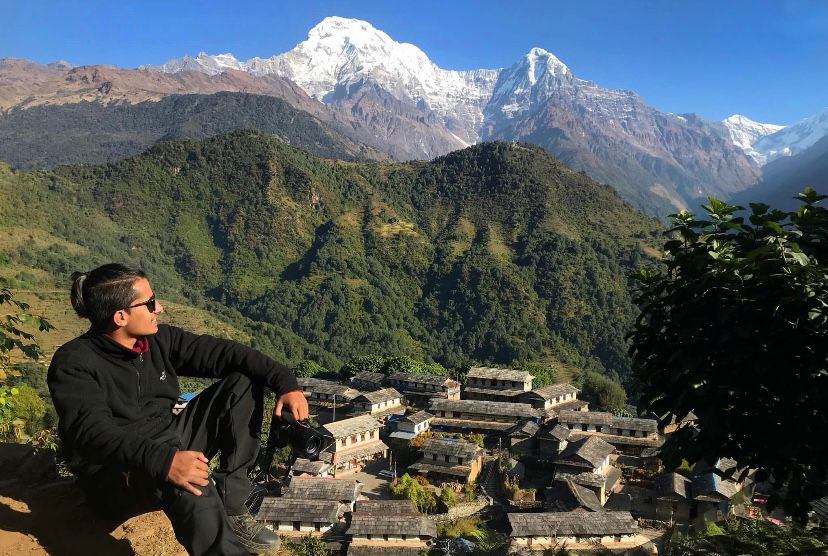
The highest point is Thorong La Pass at 5,416 meters (17,769 feet). Crossing the pass is the most demanding part of the trek and requires an early start, proper acclimatization, and suitable preparation.
The trek is considered challenging because of the altitude, long walking days, changing terrain, and the crossing of Thorong La Pass. However, you do not need technical mountaineering experience. Good physical fitness, preparation, gradual acclimatization, and following your guide’s advice can make the trek manageable for many experienced hikers.
The main trekking seasons are spring (March to May) and autumn (September to November). These months generally offer favorable trekking conditions and good mountain visibility. The exact conditions can vary from year to year, particularly at higher elevations.
Winter trekking is possible, but conditions around Thorong La can be much colder, and snowfall may affect the high pass. Weather and trail conditions should be checked before departure. Trek Curator can adjust the itinerary when necessary based on local conditions and safety considerations.
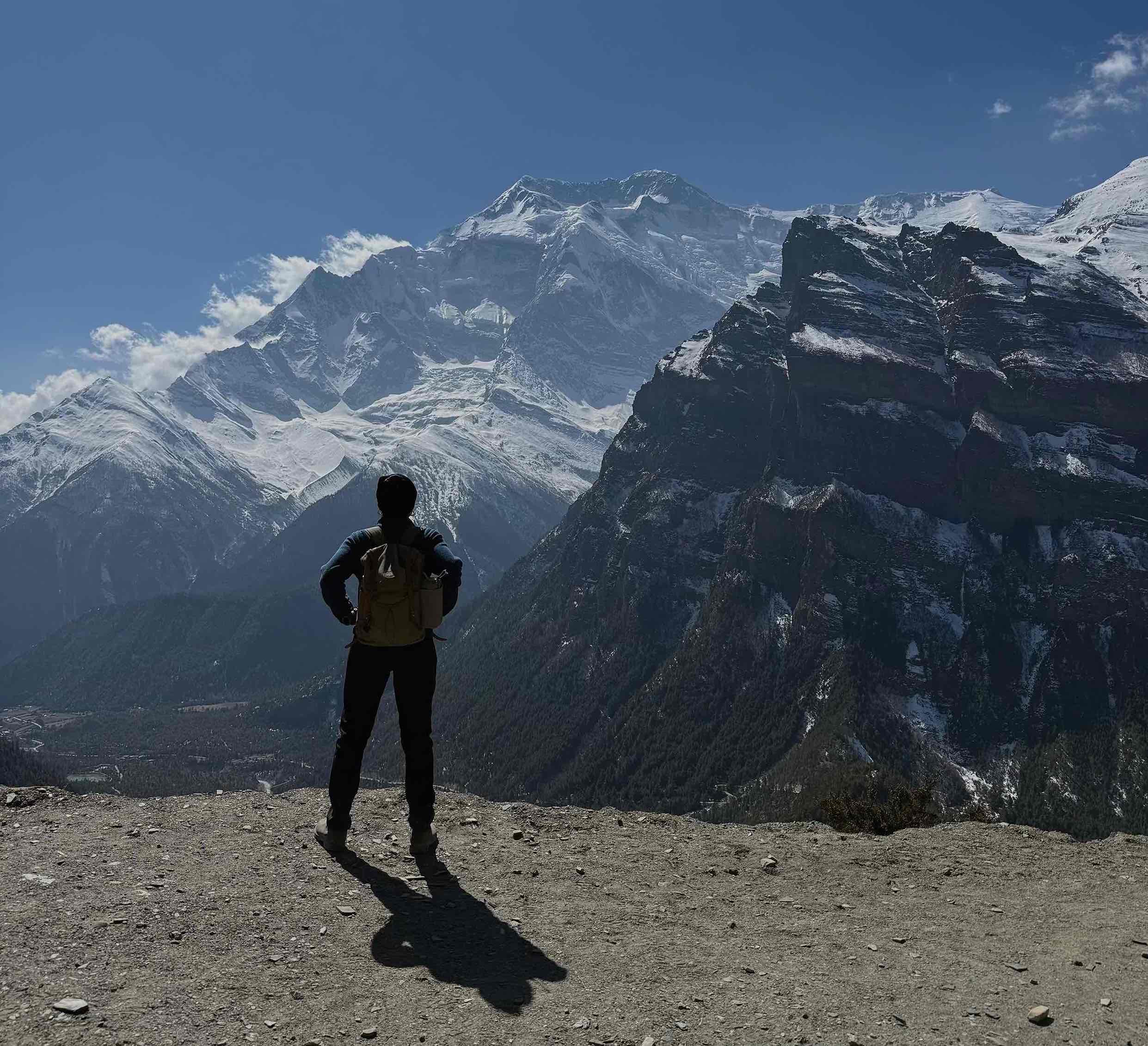
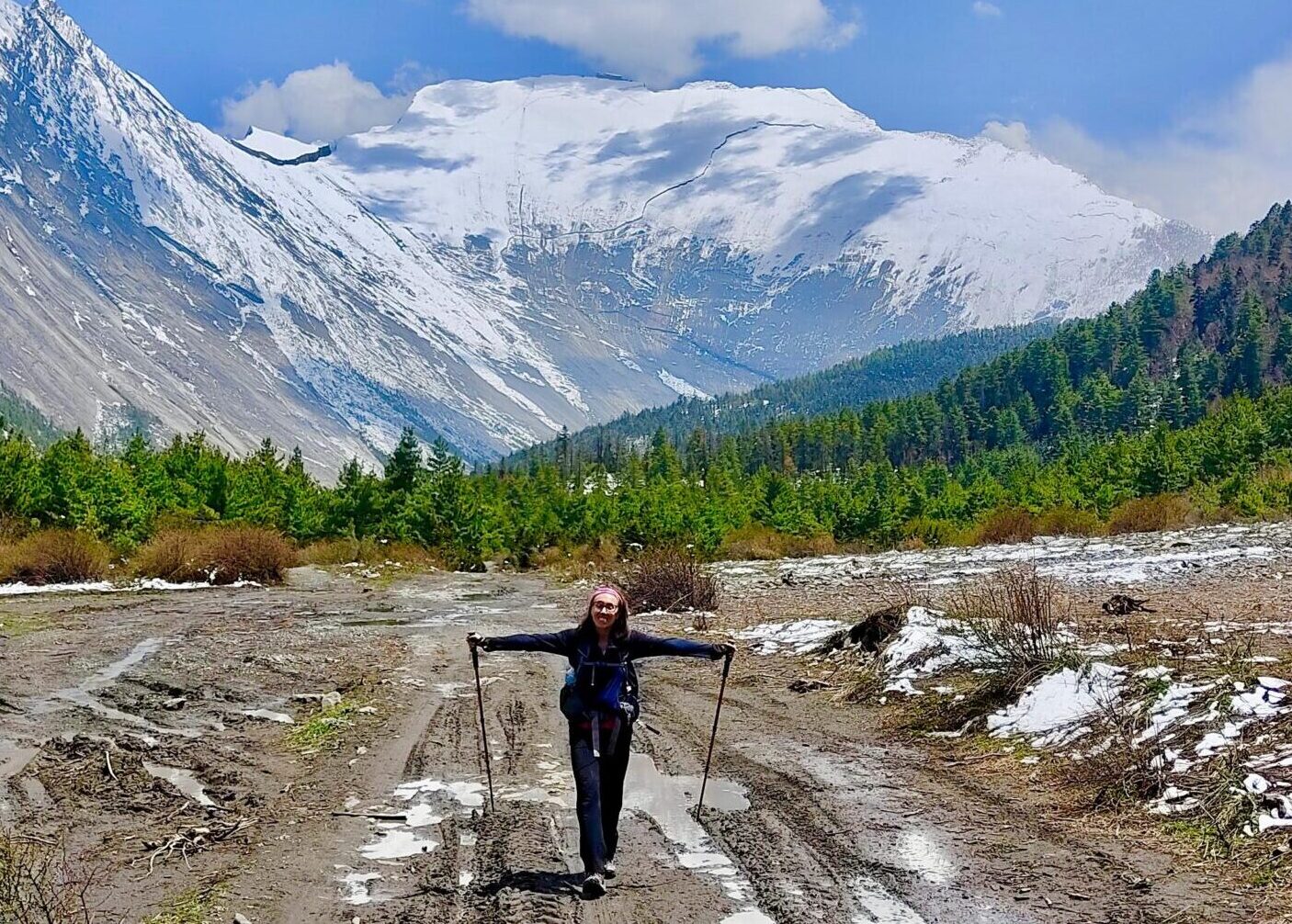
The Annapurna Circuit offers views of several major Himalayan peaks, including Annapurna II, Annapurna III, Annapurna IV, Annapurna I, Dhaulagiri, Manaslu, Lamjung Himal, and Tilicho Peak, depending on the section of the trail and weather conditions.
Ghorepani is a beautiful mountain village surrounded by rhododendron forests and Himalayan scenery. From Ghorepani, an early-morning hike to Poon Hill at 3,210 meters provides panoramic sunrise views toward the Annapurna and Dhaulagiri ranges. Poon Hill is one of the most popular viewpoints in the Annapurna region.
Yes. Proper acclimatization is particularly important before reaching the higher sections of the trail. Trek Curator includes an acclimatization day in Manang at approximately 3,540 meters, with options for short or longer hikes to help your body adjust to the increasing altitude.
Altitude sickness can affect anyone traveling to high elevations. The risk increases as you ascend above 2,500–3,000 meters. Symptoms can include headache, nausea, dizziness, tiredness, or difficulty sleeping. Walking at a sensible pace, staying hydrated, acclimatizing properly, and immediately informing your guide about symptoms are important.
Accommodation is generally in comfortable local tea houses and lodges along the trekking route. Facilities become simpler at higher elevations. Rooms are usually basic, while dining areas provide meals and a place to rest after trekking.
Tea houses serve a mixture of Nepali, Tibetan and international-style meals. Popular options include dal bhat, noodles, pasta, rice dishes, soups, momos, potatoes, eggs, bread, and hot drinks. Trek Curator can also discuss dietary requirements before your trek.
A licensed trekking guide is highly recommended, particularly because the route includes high-altitude sections and the Thorong La Pass crossing. A porter can carry your main luggage, allowing you to walk with a lighter daypack. Trek Curator can arrange guide and porter services according to your group size and preferences.
A porter generally carries a shared load for trekkers, with Trek Curator’s current itinerary information noting approximately 20–25 kg per porter. Your personal daypack should contain only the items you need during the day’s walk.
The Annapurna region requires trekking documentation, including the Annapurna Conservation Area Permit (ACAP) and applicable trekking registration/TIMS requirements. Trek Curator can assist with arranging the necessary permits before the trek.
The route can vary depending on road conditions and the customized itinerary. The classic Annapurna Circuit begins around the Besisahar area, while modern itineraries commonly use road transportation to reach a higher trailhead, such as Dharapani, before starting the main trekking section.
Yes. The Trek Curator Annapurna Circuit Ghorepani itinerary crosses Thorong La Pass at 5,416 meters before descending toward Muktinath, an important pilgrimage destination for both Hindu and Buddhist visitors.
Yes. This is one of the highlights of the Annapurna Circuit Ghorepani itinerary. After crossing Thorong La and reaching the Mustang side of the Annapurna region, the route continues toward Tatopani and then climbs to Ghorepani. The trek concludes with a sunrise hike to Poon Hill before continuing toward Pokhara.
The route is famous for its dramatic landscape changes. You can experience green hills, terraced farmland, forests, waterfalls, deep valleys, alpine terrain, high mountain deserts, traditional villages, glaciers, and panoramic Himalayan views during the same journey.
It can be suitable for fit and well-prepared first-time trekkers, but it should not be underestimated. The altitude and Thorong La crossing make this a demanding Himalayan trek. First-time trekkers should prepare with regular walking, hiking, and cardiovascular exercise before arriving in Nepal.
Essential items include good trekking shoes, warm layers, a waterproof jacket, trekking trousers, thermal clothing, gloves, a warm hat, sunglasses, sunscreen, a sleeping bag, water bottle, personal medication, basic toiletries, and a comfortable backpack. Trek Curator can provide a detailed packing list before departure.
Yes. Trek Curator can customize the itinerary according to your travel dates, fitness level, preferred walking pace, accommodation preferences, transportation, and available time. Additional acclimatization or sightseeing days can also be discussed.
Weather conditions at high altitude can change quickly. Strong winds, heavy snowfall, or poor visibility may affect the crossing. Your guide and Trek Curator team will monitor local conditions and adjust the itinerary when necessary, prioritizing the safety of the trekking group.
Connectivity varies along the route. Some villages and tea houses have mobile coverage or Wi-Fi, while connectivity can be limited or unavailable in remote sections. It is best to be prepared for periods without a reliable internet connection.
Contact Trek Curator with your preferred travel dates, group size, and any special requirements. Our team can help you plan the itinerary, arrange permits, transportation, accommodation, guides, porters, and other trekking services for your Annapurna adventure.
Trek Curator is a Nepal-based travel and trekking company offering customized Himalayan adventures with local guides and trekking support. We focus on practical planning, responsible trekking, clear communication, and creating memorable experiences while exploring Nepal’s mountains and communities.
Verified guest feedback collected from Tripadvisor and Google Reviews.
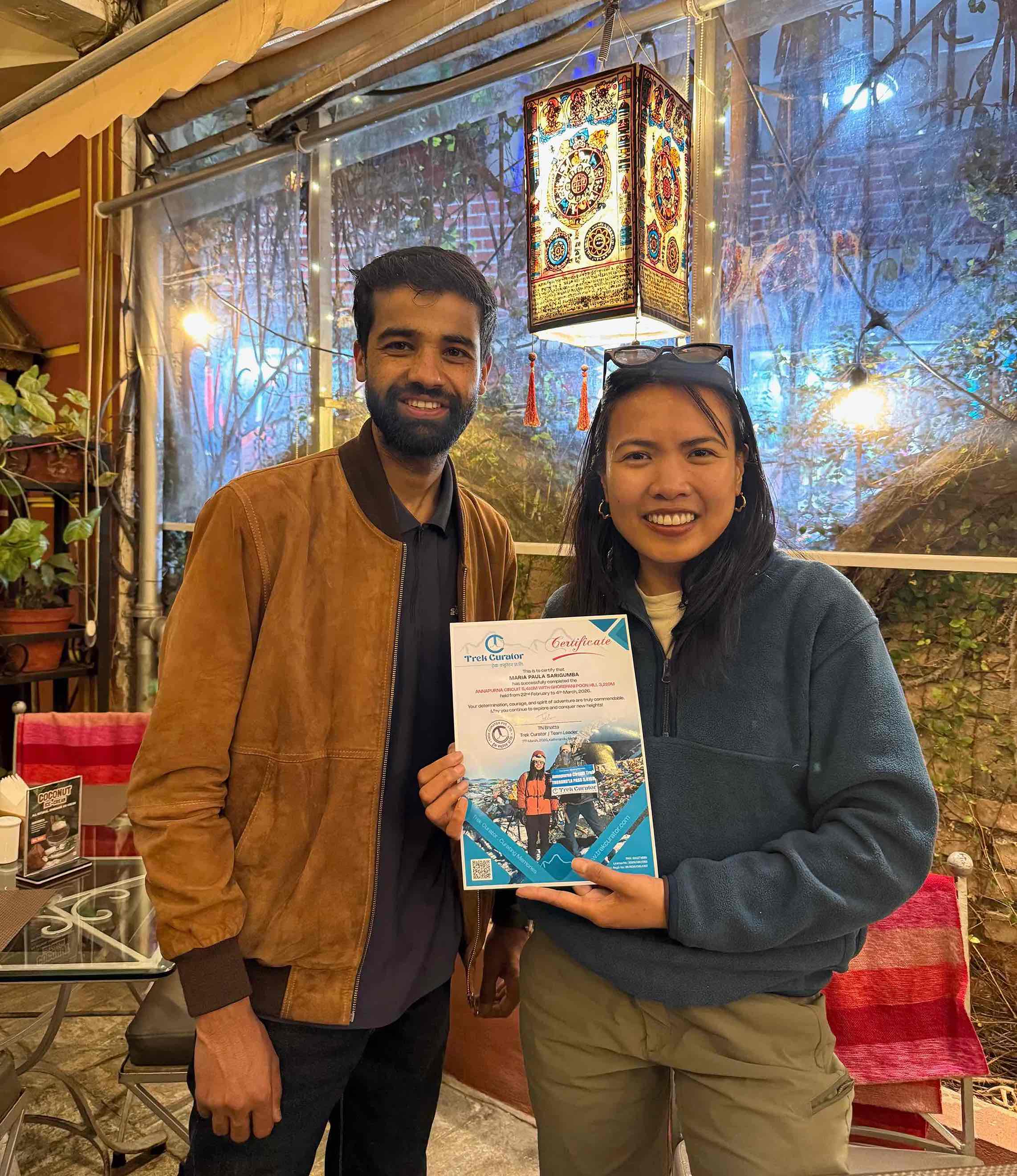
I had a wonderful experience trekking the Annapurna Circuit with Trek Curator. My guide, TN Bhatta, was incredibly accommodating and attentive throughout the journey. When I started feeling a little sick during the hike, he went out of his way to make sure I was comfortable and well taken care of—bringing extra blankets, arranging warm soups, and checking in regularly.
His encouragement and steady motivation helped me push through and successfully complete the trek. I’m very grateful for his support and professionalism. Thank you, TN, for making this challenging trek such a memorable and positive experience!