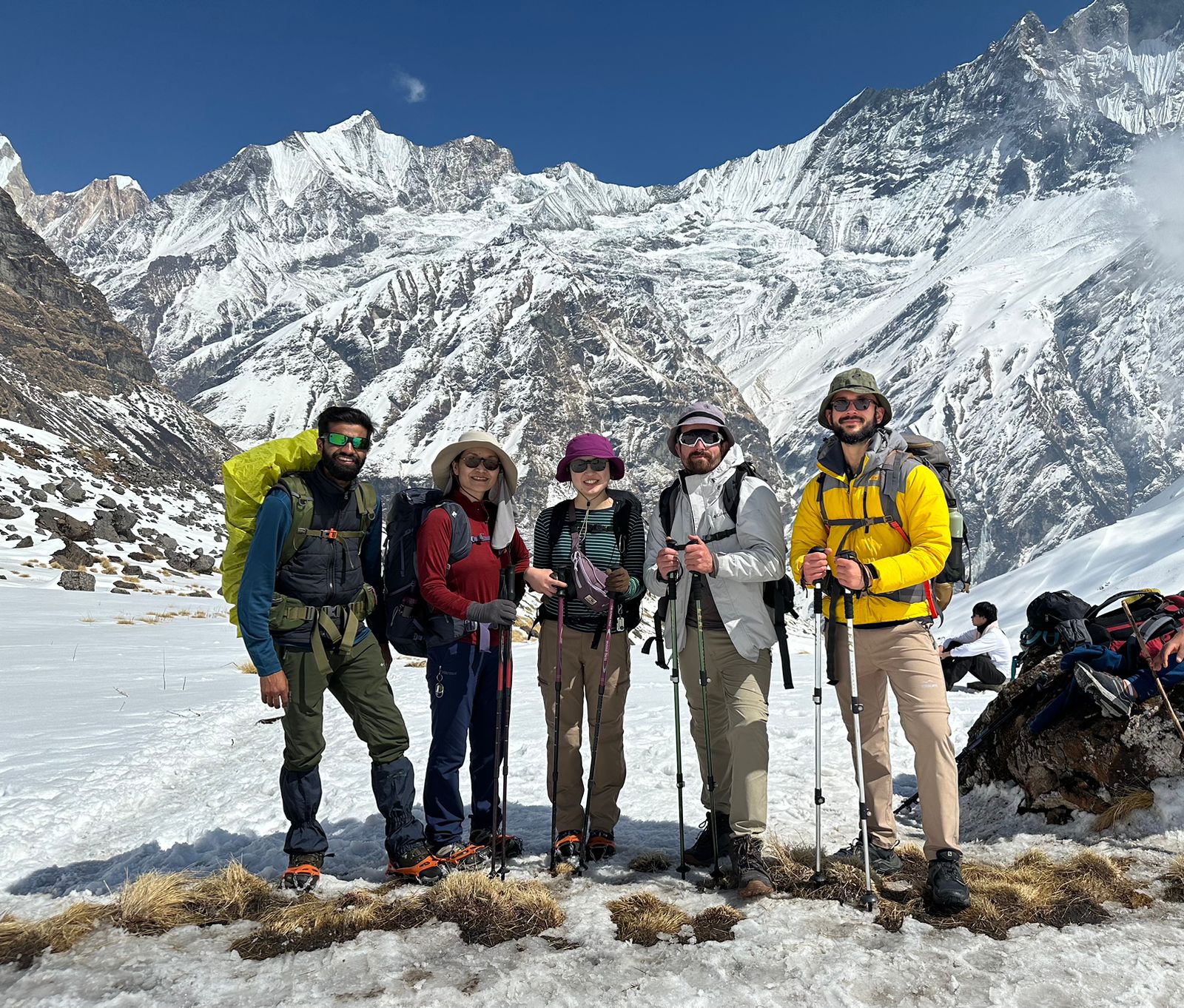
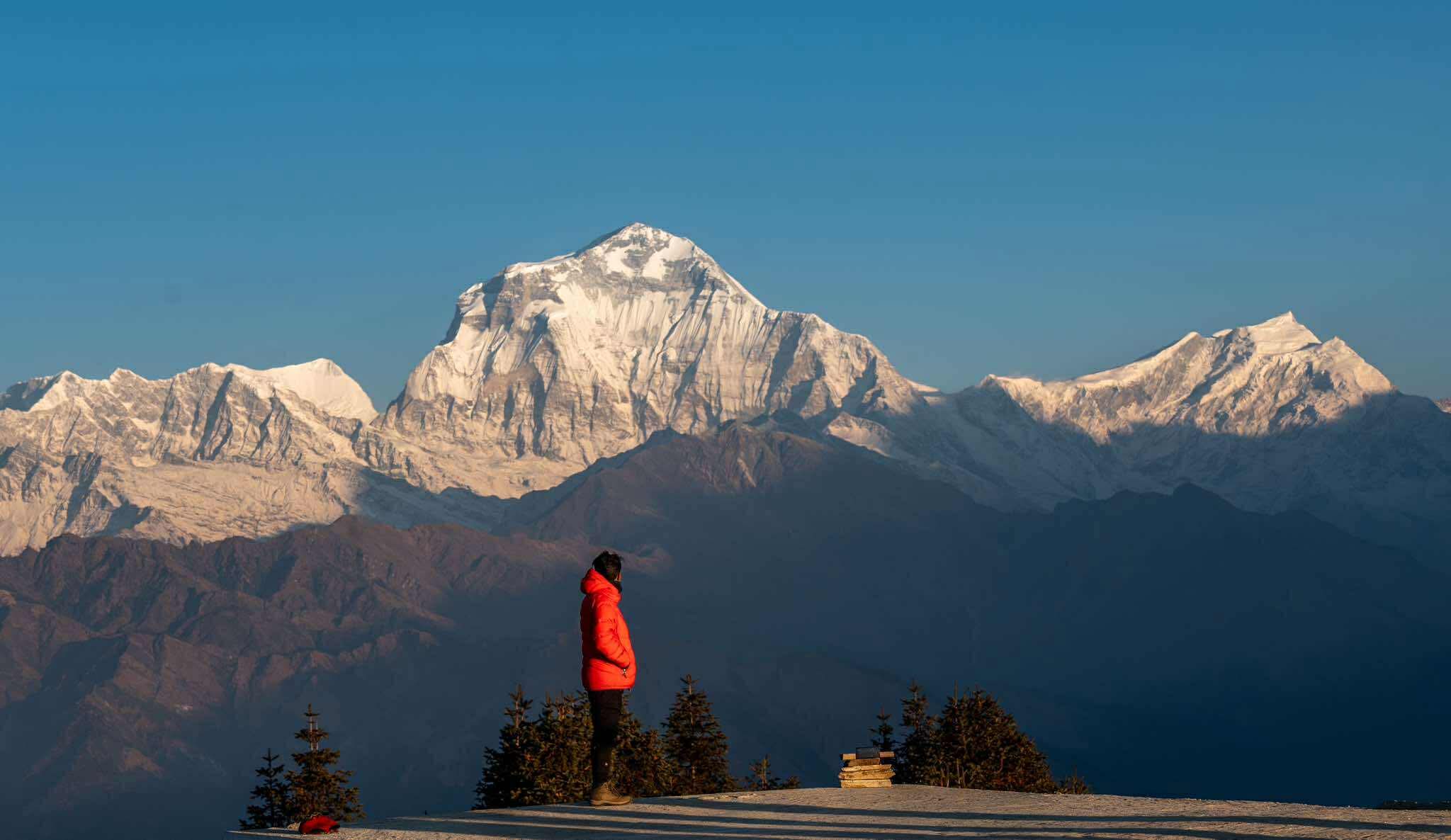
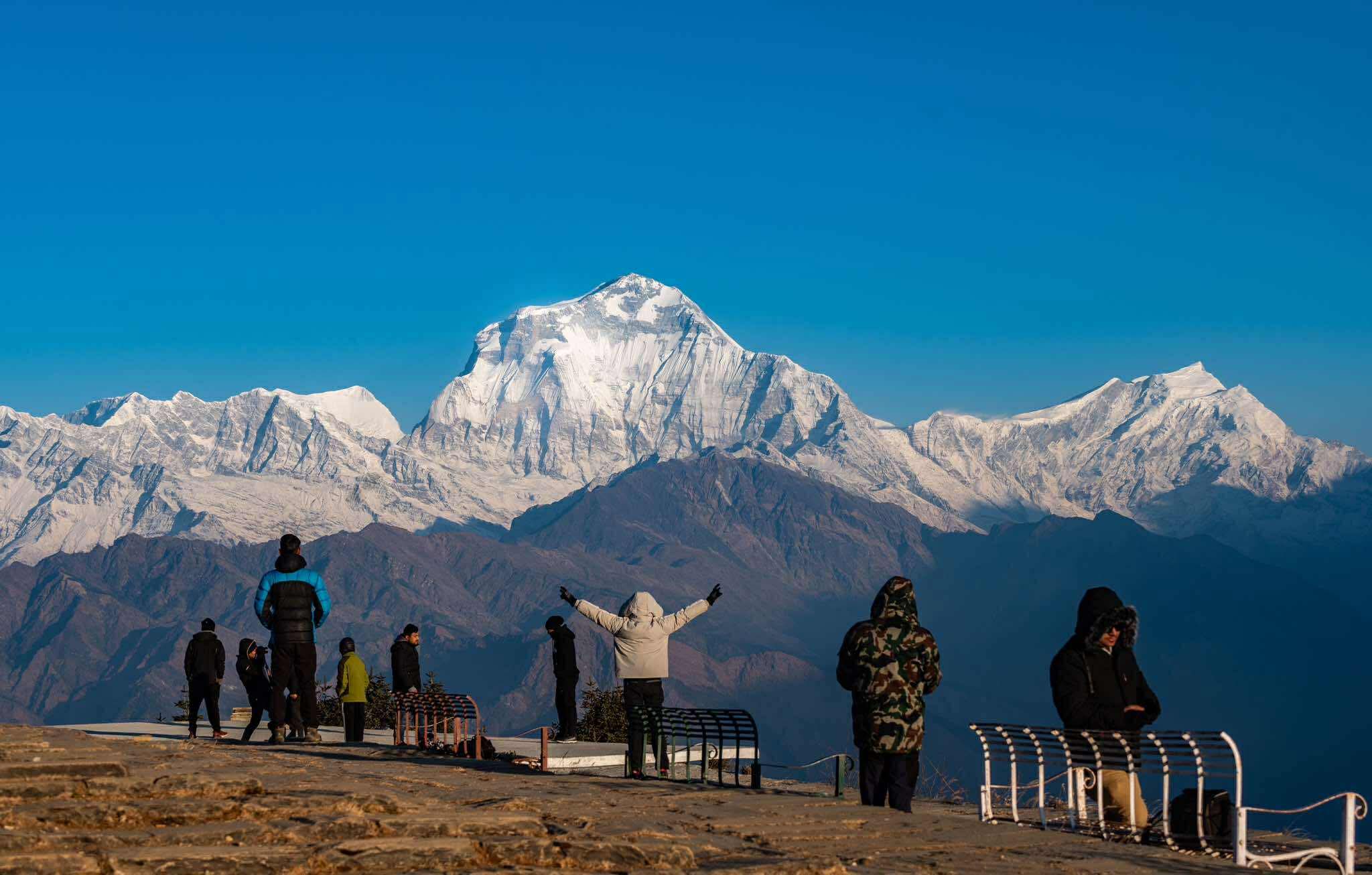
A "challenging" trip grade indicates a demanding, high-altitude adventure (often 5,000–6,000+ meters) designed for experienced adventurers with excellent fitness.
The Narphu Valley Trek takes you up the Marsyangdi Valley in the Annapurna region and into the Nar and Phu valleys, two Tibetan-influenced villages in a restricted area. You cross Kang La (5,320 m) to rejoin the Annapurna Circuit at Ngawal, walk on through Manang, and finish over Thorong La (5,416 m) to Muktinath. Both ends of the trip are by road. The itinerary runs 17 days from arrival to departure.
This trek suits people who have already walked several days in a row at altitude, or who are fit and ready to prepare properly. It is not a first Himalayan trek. Expect two long pass days of about 9 hours, remote overnight stops, and a long gap between Nar and the nearest road. Spring and autumn are the usual windows.
Not sure which dates fit your plans? Send us a message through our Contact Page or check out our Home Page for more details. . It's a no-commitment question.
The route climbs through the lower Marsyangdi valley (Tal, Koto), turns north into the Nar Phu gorge toward Meta, and follows the valley up to Phu. It then steps back down to Nar Phedi and up again to Nar. From Nar, Kang La leads to Ngawal and onward to Manang. From Manang, you follow the classic route via Yak Kharka and Thorong Phedi or High Camp, over Thorong La, and down to Muktinath. The logic is simple: go deep, acclimatise, cross out, then repeat the process toward a bigger pass.
We are affiliated with the Nepal Tourism Board, TAAN and the Nepal Mountaineering Association, and hold a Tripadvisor Travellers' Choice 2026 recognition. We are based in Thamel, Kathmandu, and are reachable on WhatsApp. See our Why Choose Us and Our Team pages for more.
Our representative meets you at Tribhuvan International Airport and transfers you to your hotel. Rest, adjust to the time zone, and sort your gear. In the afternoon or evening, attend a pre-trek briefing where your guide checks your equipment, verifies your insurance documents, and reviews safety protocols. Overnight: Kathmandu hotel
Drive: 8–9 hours. Leave early by road along the Prithvi Highway, then branch north toward Besisahar. From there a shared four-wheel-drive jeep follows the rough tracks along the Marsyangdi River past waterfalls, terraced hillsides and traditional settlements to the riverside village of Tal. The start is warm and humid. Overnight: Teahouse
Walking: 5–6 hours. Your first trekking day climbs gently out of the Tal basin through pine forest, over suspension bridges, and through villages including Dharapani and Danakyu. You gain roughly 750 m. Koto is a historic trading post and the checkpoint where your restricted area permits are registered. Overnight: Teahouse
Walking: 7–8 hours. One of the most demanding transition days, marking your entry into the restricted Nar Phu valley. Leave the main Annapurna Circuit trail, cross a wooden bridge over the Nar Khola, and climb steeply through a narrow, pine-covered gorge. The trail opens into high-altitude scrubland before the final push to Meta. Sleeping altitude rises by roughly 950 m, so your guide will set a very slow pace. Overnight: Teahouse
Walking: 4–5 hours. A shorter, easier day along the high arid plateau with views of Kang Guru and Annapurna II. You pass Tibetan-style stone boundary markers (kanis) and abandoned seasonal settlements before reaching the windswept valley of Kyang, surrounded by rock formations. Overnight: Teahouse
Walking: 5–6 hours. Follow the glacial river upstream past rock carvings and mani walls, then climb a series of switchbacks to the hidden village of Phu. Whitewashed houses stack against the cliffside, and Tashi Lhakhang Monastery sits on the hill above. Overnight: Teahouse
Walking: 2–3 hours, light. You sleep a second night at the same altitude to let your body adapt. Take a guided walk toward the Himlung Himal base camp trail or visit Tashi Lhakhang Monastery to meet local monks. Overnight: Teahouse
alking: 5–6 hours. Retrace your steps down the valley past Kyang and Meta, with a different view of the gorge looking south. From Meta the path drops toward the Nar Khola riverbed and the small outpost of Nar Phedi, a few farm buildings and a mountainside monastery. Overnight: Monastery lodge or teahouse
Walking: 2–3 hours. A short but steep climb out of the river valley. Nar is smaller and more tightly clustered than Phu, with barley and mustard fields and wide mountain views. You arrive by midday, leaving the afternoon to rest and explore. Overnight: Teahouse
Walking: 2–3 hours, light. Take a gentle ridge walk above the village, then rest, wash clothes, and prepare your gear for the pass day ahead. Overnight: Teahouse
Walking: 9–10 hours. The longest and hardest day of the first half. Start well before dawn for the sustained, steep climb to Kang La. The terrain turns to loose scree, snow patches and moraine. From the prayer-flag-draped pass you see Annapurna II, Gangapurna and the Tilicho massif. The descent is steep and testing on the knees, ending at Ngawal on the main Annapurna Circuit trail. Overnight: Teahouse
Walking: 4–5 hours. A relaxed recovery day on the broad valley trail. You pass Braga, known for its cliffside monastery. Arrive in Manang by early afternoon for bakeries, hot coffee and comfortable lodges. Overnight: Teahouse
Walking: 4–5 hours. The trail climbs out of the tree line past juniper shrubs and yak pastures, with views of Annapurna III, Gangapurna and Chulu East. You arrive by early afternoon with time to rest and acclimatise. Overnight: Teahouse
Walking: 3–5 hours. Cross the river and climb a narrow trail on steep gravel slopes below Thorong Peak. Your guide decides between Thorong Phedi and High Camp based on your condition and the weather forecast. High Camp shortens the pass day but means sleeping at nearly 5,000 m. Overnight: Teahouse
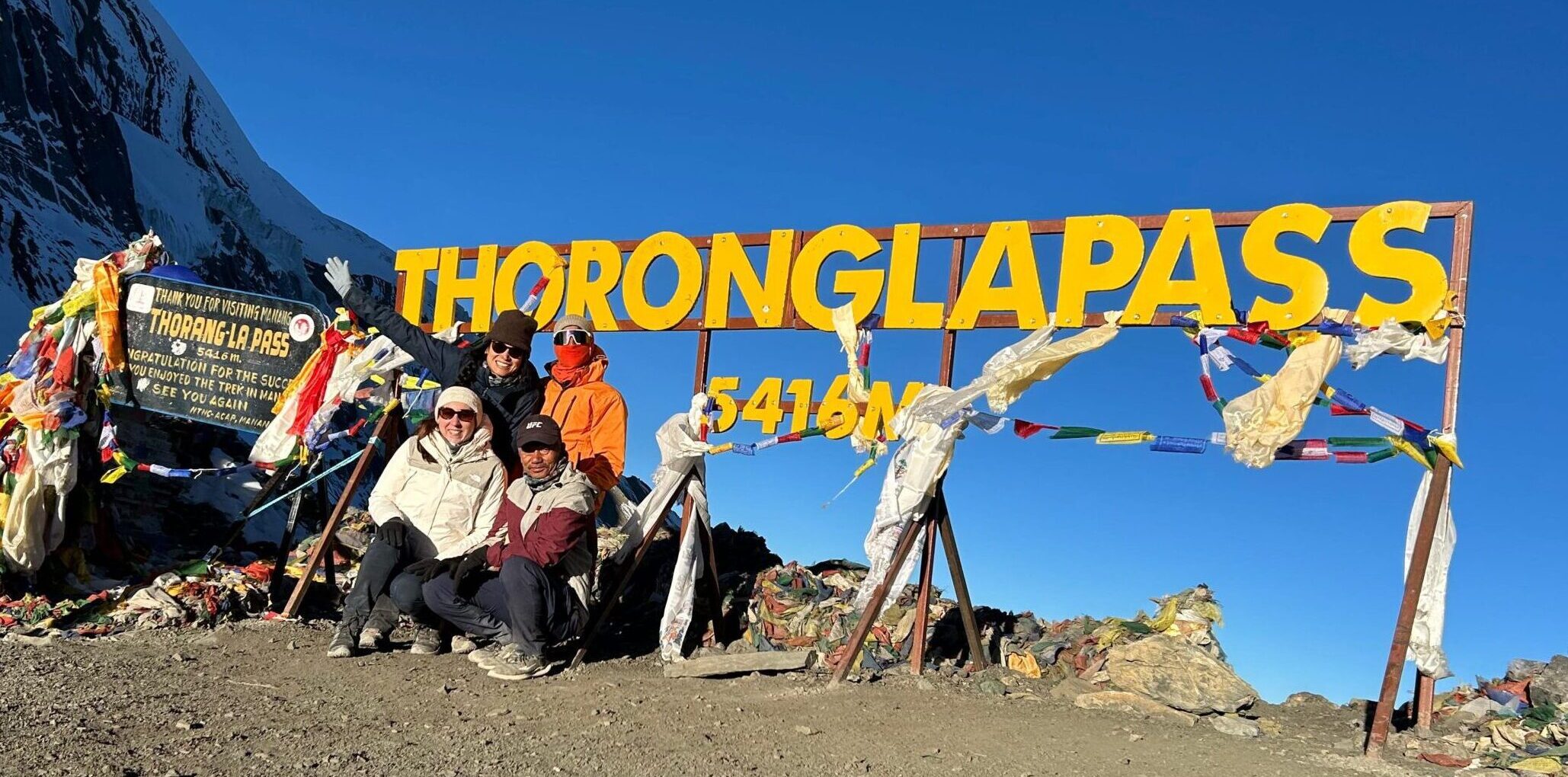
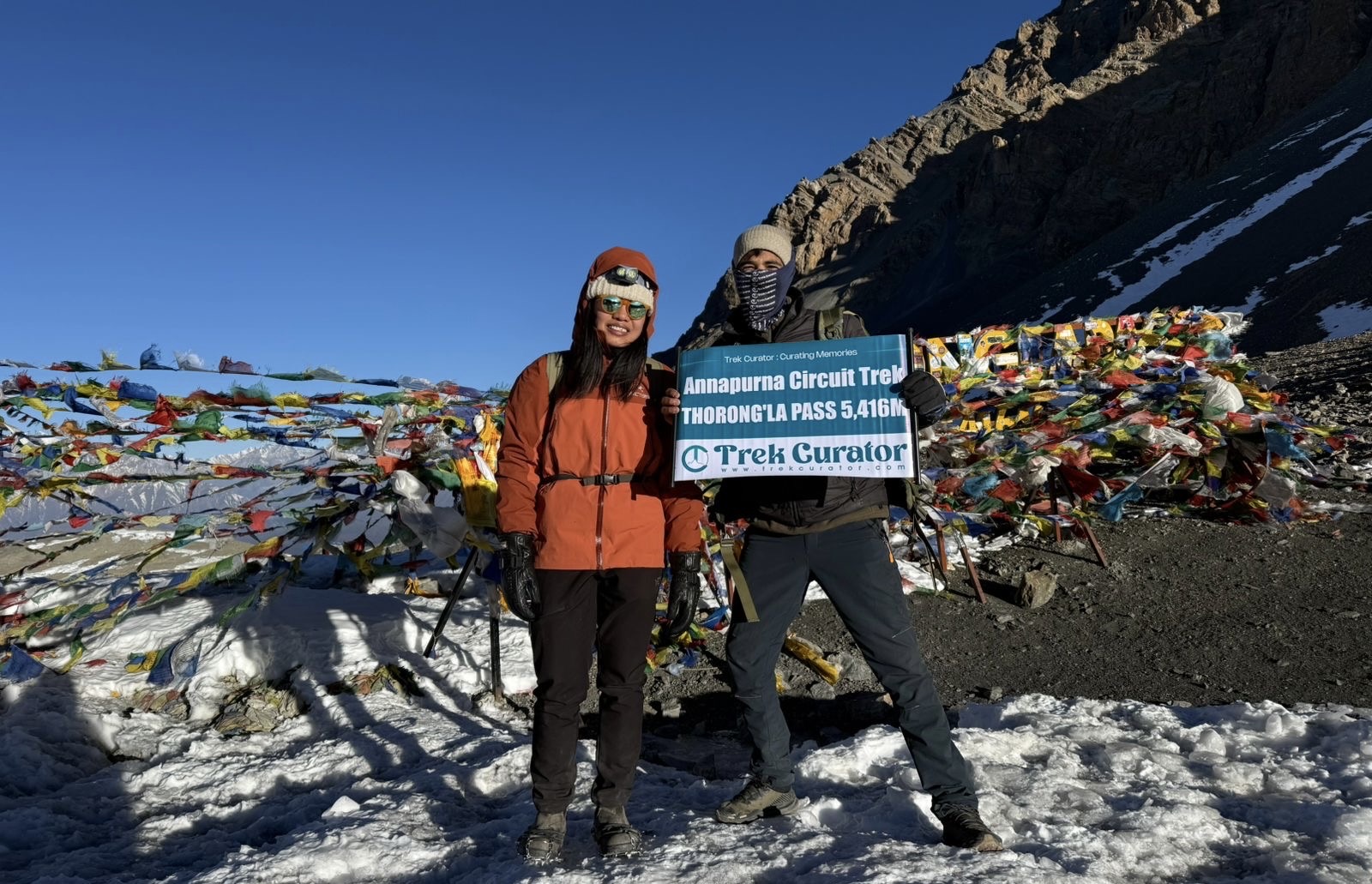
Walking: 8–9 hours. Start around 4:00 AM in sub-freezing temperatures. Climb steadily up the icy moraine to the prayer flags at Thorong La, the highest point of the trek. Then begin the long, steep descent of roughly 1,700 m into the pilgrimage town of Muktinath. Take care of your knees on the loose gravel. Overnight: Hotel or teahouse
Drive: 6–7 hours. Take a morning jeep or bus down the Kali Gandaki gorge through Kagbeni and Jomsom, past windswept landscapes and apple orchards, to the lakeside city of Pokhara. Celebrate by Phewa Lake. Overnight: Pokhara hotel
Drive: 7–8 hours. A morning drive back to Kathmandu, then transfer to your hotel. In the evening, join a farewell dinner hosted by us to celebrate your traverse of the Narphu Valley and both passes. Overnight: Kathmandu hotel
Modify itinerary, accommodation, transportation, or activities according to your travel style and schedule.
Most days are 4–6 hours. The big days are Nar to Ngawal via Kang La (9–10 hours) and Thorong Phedi or High Camp to Muktinath via Thorong La (8–9 hours). The Thorong La day also drops about 1,700 m, which is hard on the knees. The trail is remote throughout the restricted section, with basic lodges and little margin for delays.
You should be comfortable walking 6–8 hours with a daypack, day after day. A beginner can prepare, but should plan for months of training:
Sleeping altitudes: Tal 1,857 m, Koto 2,610 m, Meta 3,560 m, Kyang 3,820 m, Phu 4,250 m, Nar Phedi 3,490 m, Nar 4,110 m, Ngawal 3,600 m, Manang 3,540 m, Yak Kharka 4,050 m, Thorong Phedi 4,600 m or High Camp 4,900 m. The highest point is Thorong La at 5,416 m.
The first big jump is Koto to Meta, a sleeping-altitude gain of roughly 950 m. That is more than the 300–500 m per night often suggested above 3,000 m, so your guide will pace this day carefully.
The rest days sit at the two villages where you have just gained height. At Phu you spend a night, then a day with a short walk, then another night at the same altitude. Nar works the same way. By Kang La you have spent several nights at about 4,000 m or above. Manang is lower than Nar, giving you a recovery night before the final stretch.
Know the warning signs and tell your guide immediately:
headache that doesn't ease
nausea
dizziness
unusual tiredness
breathlessness at rest
confusion
unsteady walking
If symptoms worsen, go down. Do not push on, and do not self-treat or make dosing decisions on your own.
Not sure whether your fitness fits this route? Tell us your recent hikes and we'll give you an honest answer before you commit.
Spring (March–May) and autumn (September–November) are the usual windows. Autumn is the busiest and most expensive period. Spring has more snow risk on the passes. Winter and early spring can leave snow on both passes, and snow, wind and cold are what close Kang La and Thorong La. Nar Phu sits in a relatively rain-shadowed area, but monsoon rain can still affect the drive from Kathmandu.
Nar and Phu are in a restricted area. Trekkers cannot obtain the restricted area permit themselves: a registered Nepali agency applies for it, and it is issued for fixed entry and exit dates. Tell us before you travel if your dates may shift.
Your package covers the Nar Phu Restricted Area Permit (RAP), the Annapurna Conservation Area Permit (ACAP) and the TIMS card. We'll ask for your passport details after booking to apply for them.
Most visitors can get a tourist visa on arrival. For a 17-day itinerary, a 30-day visa is the realistic minimum. Visa fees change, so check the current fee with the Department of Immigration before you travel. The visa fee is not included in the package.
Day 2: Kathmandu to Besisahar by road, then a shared four-wheel-drive jeep to Tal (8–9 hours in total).
Day 16: Muktinath to Pokhara by jeep or bus (6–7 hours).
Day 17: Pokhara to Kathmandu by road (7–8 hours).
No domestic flight is part of this itinerary, so there is no flight schedule to depend on.
You stay in Kathmandu and Pokhara hotels and in teahouses on the trail. Teahouse rooms are simple, mostly twin rooms with mattresses, and are generally unheated. Bathrooms are shared, and the dining room is where the stove is lit. Phu and Nar are the most basic stops. Phone charging is limited and often paid, and hot showers may be unavailable at the highest stops.
A licensed guide is required in Nar Phu. Your English-speaking, government-licensed guide watches for altitude symptoms and adjusts pace early. Porter support is included at one porter for every two trekkers, with a weight limit of 15–20 kg per porter.
You cannot trek this route independently or without a guide. A private party or a small group works best, because two high passes need flexibility if the weather turns. Contact us with your dates and group size and we'll arrange a departure around you.
Drink steadily and eat even when appetite drops. Report symptoms early. Never hide a headache to keep up with the group. Before departure we ask you to complete a health declaration form and disclose any condition that could affect your safety.
Insurance is mandatory. It must cover trip cancellation, medical treatment, and emergency evacuation including helicopter rescue at altitude, and you must send proof before departure. Make sure the policy explicitly covers trekking to at least 5,500 m. Thorong La is 5,416 m.
Enquire through the contact page or WhatsApp with your dates and group size.
Confirm in writing, by email or through our online booking form.
Pay the 25% non-refundable deposit.
Send passport details for the permit applications.
Complete the health declaration and send proof of insurance.
Pay the balance by the deadline on your invoice, before departure.
Ready to go? Confirm your booking here.
Payment and cancellation
A non-refundable deposit of 25% of the total trip cost is required at booking. The balance is due in full by the deadline on your invoice, always before departure.
All cancellations must be submitted in writing.
At booking: the deposit is non-refundable, whatever the reason for cancellation.
15–35 days before departure: a 25% cancellation fee of the total trip cost applies, plus any non-recoverable hotel, flight or permit charges already incurred. Any remaining balance is refunded.
Less than 15 days before departure, or a no-show: the full trip cost (100%) is non-refundable.
No refunds are given for early returns, missed days, unused services, or itinerary changes after the trip has begun.
Accepted methods: bank transfer (SWIFT, recommended for international clients), online gateways such as Stripe or PayPal (fees may apply), cards (3–4% surcharge), and cash in person in Nepal.
Nar and Phu are far from roads. A serious problem may mean descent on foot first, then transport, or a helicopter if conditions allow. Helicopter flights depend on weather and cloud, and no one can promise evacuation timing. Cover and payment are the insurer's decision. Tell us your policy details before you go so we know who to call.

Airport transfers and ground transportation by private vehicle or shared jeep, as per the itinerary
Standard hotel accommodation in Kathmandu and Pokhara with daily breakfast
Teahouse accommodation during the trek
Breakfast, lunch and dinner while on the trekking route
Government-licensed, English-speaking guide, plus porter support (one porter per two trekkers, 15–20 kg limit per porter)
Nar Phu Restricted Area Permit (RAP), Annapurna Conservation Area Permit (ACAP) and TIMS card
Insurance, food and lodging for all staff
International flights and Nepal entry visa fees
Travel insurance covering high-altitude emergency helicopter evacuation up to 5,500 m
Lunch and dinner in Kathmandu and Pokhara
Personal expenses such as hot showers, battery charging, Wi-Fi, bottled or boiled water, and snacks
Tips for guide and porters
It shares the Manang to Muktinath section with the classic circuit, so Thorong La is the same. The Nar Phu section adds a restricted valley, Kang La, and a longer stretch without roads. For most trekkers that makes it harder.
Because of its closeness to the Tibetan border, which is why a guide, an agency and a separate permit are required.
Your guide makes the call on the day, and safety comes first. This itinerary has no spare day built in, so tell us if you'd like one added.
Permits are issued for specific dates, so tell us before you travel if your dates may shift.
Verified guest feedback collected from Tripadvisor and Google Reviews.